We continued our Open Space on the Balcony meetings last night (2-12-07). The bad weather was onimous so we were a little late in starting and a little smaller than our last meeting. However, we proceeded to explore Heifetz' ideas and his approach to teaching adaptive leadership with our core group.
Each of us brought something to read that inspired us. We started by describing the core of each; we found an interesting symetry related to finding a pause between being and doing. There seemed to be a natural struggle for each of us in putting our worlds together in ways that allowed a time-out to explore the implications of what we are doing or seeking to achieve. This led to a very natural conclusion that for most of us, our deepest questions are adaptive concerns that have no easy answer. This is also the core of Heifetz' assertion - that the most important and profound leadership occurs on the tough questions that have no answer. When we attempt to address adaptive concerns, several perspectives can help us. As summarized in a Harvard Business Review article by Heifetz and Laurie (2001) entitled "The Work of Leadership," adaptive leadership includes 1) getting on the balcony, 2) identifying the adaptive challenge, 3) regulating distress, 4) maintaining disciplined attention, 5) giving the work back to the people, and 6) protecting voices from below. We talked about these ideas as exemplifying our intereactions in our open space meetings and we will continue to experiment with them as we delve into reading our inspirational pieces.
We didn't have a lot of time to share our pieces but Jon at least got us started. He combined two readings, one contemporary and one from a 19th century poet in Wales. Jon did a great job of taking time to center and becoming present before he began. When we talked about what was most effective in his reading, the fact that he did not rush in was one of the most important factors that helped him to be effective. In addition to thoughtful preparation, he read at a very comfortable pace, providing pauses throughout to allow us to soak in what he was reading. This was a great demonstration of important principles of leadership - not rushing in, being in the moment, and approaching the adaptive work with appropriate space and time to reflect.
We'll come back in our subsequent meetings to see how our other inspirational readings relate to adaptive leadership ideas.
Tuesday, February 13, 2007

Friday, February 09, 2007
Open Space on the Balcony
One of the models I reference in Deeper Learning in Leadership is that of Dr. Ron Heifetz' at Harvard University. Dr. Heifetz has been very influential in the leadership studies world. His insights as an artist, M.D. with a focus on psychiatry, and an organization consultant have shed very significant light on the most important dynamics of leadership, a specific form of leadership that he calls "adaptive leadership." The latest book to be published about Dr. Heifetz' work and his teaching method, called "case-in-point" teaching, is described in Sharon Daloz Parks' Leadership Can be Taught. This book is a remarkable account of a style of teaching that takes students to a much deeper level of learning about leadership. As I launched into rereading this book a month ago, I've become captivated by his methods and I'm beginning to use them in some of my interactions and work with students.
One application on which I'm working is the "Open Space on the Balcony" non-credit seminar with students in the Scholar Leader program at Miami. This is a residentially based program of upperclass students who have a special interest in leadership, service, and creating healthy communities. The open space part of the title indicates that anyone can come, anything is fair game, and all are free to come and go at will. The balcony part of the title uses Dr. Heifetz' metaphor of "going to the balcony" from the dancefloor in order to gain perspective about the organizations of which we are part. We've only had two meetings of this group but the process promises to be extremely informative. Witness to this is a post to the Scholar Leader listserv by one of the participants, Brendan on 2-6-07:
I just wanted to take a few minutes to share with you guys some of my thoughts about the open-space discussions that we've begun to hold at 8PM in the Stoddard living room on Monday evenings (right before the community meeting). Having the discussions has become a relaxing yet reflective time of day. It is certainly a light atmosphere in that nobody is obliged to be there, can participate in the discussion at their will, and is slightly free of strict parameters. At the same time, they are incredibly serious and meaningful conversations that we have, so far focusing on three general themes: leadership, service, and purpose.
I've participated in the open space discussions very willingly so far, and feel that through engaging in them learn so much more about myself, and yet the same about everyone else. It is an excellent time for self-reflection, -discovery, and -evaluation, while it also allows you to learn so much more about the other community members. I feel that this may be one of the most powerful ways that we as community members can interact to build community and relationships amongst each other. I'm excited that by the end of this semester, I feel that I will have developed myself in many ways, as well as built personal connections with some community members that may prove to be stronger than many of the bonds that have been created with other people at Miami University.
I think that the open space discussions truly are an excellent activity that all of us in Stelliott can participate in and benefit from and I'd encourage anyone and everyone to just pop in one time and attend - you'll find that by the time 9PM rolls around and it's time to leave, you wish there was more time. Although it hurts the discussion, having a time-frame is useful for most of us who have already extremely busy schedules.
Those who are considering coming next week, Denny asked that we bring some piece of writing that we find very important and meaningful. This could be anything from poetry or prose, to song lyrics, to an essay on...anything! Just bring a writing of some sort that you have found meaningful to your life.
Thanks for reading, Stelliott,
Brendan
We will use the readings students bring to creat the "holding environment" that allows us to learn about leadership. A key factor in this is that leadership is not something we exercise or impose on others. Adaptive leadership involves all participants actively engaging with other - expressing, responding, engaging, risking - to truly encounter one anothers' ideas and greatest aspirations. As college students, these aspirations may seem tentative and small but to begin to explore them is what is important. Brendan told us at the conclusion of last week's meeting that he felt he hadn't yet discerned big and important things the he held sacred. I tried to respond compassionately by saying that to not have a deep commitment was not the problem. Instead, the problem is that so many of us are unwilling to explore the possibility of having a deep commitment. Not exploring our deeper purposes is a terrible waste of talent and possibility.
We'll see where next week's Open Space on the Balcony takes us...
One application on which I'm working is the "Open Space on the Balcony" non-credit seminar with students in the Scholar Leader program at Miami. This is a residentially based program of upperclass students who have a special interest in leadership, service, and creating healthy communities. The open space part of the title indicates that anyone can come, anything is fair game, and all are free to come and go at will. The balcony part of the title uses Dr. Heifetz' metaphor of "going to the balcony" from the dancefloor in order to gain perspective about the organizations of which we are part. We've only had two meetings of this group but the process promises to be extremely informative. Witness to this is a post to the Scholar Leader listserv by one of the participants, Brendan on 2-6-07:
I just wanted to take a few minutes to share with you guys some of my thoughts about the open-space discussions that we've begun to hold at 8PM in the Stoddard living room on Monday evenings (right before the community meeting). Having the discussions has become a relaxing yet reflective time of day. It is certainly a light atmosphere in that nobody is obliged to be there, can participate in the discussion at their will, and is slightly free of strict parameters. At the same time, they are incredibly serious and meaningful conversations that we have, so far focusing on three general themes: leadership, service, and purpose.
I've participated in the open space discussions very willingly so far, and feel that through engaging in them learn so much more about myself, and yet the same about everyone else. It is an excellent time for self-reflection, -discovery, and -evaluation, while it also allows you to learn so much more about the other community members. I feel that this may be one of the most powerful ways that we as community members can interact to build community and relationships amongst each other. I'm excited that by the end of this semester, I feel that I will have developed myself in many ways, as well as built personal connections with some community members that may prove to be stronger than many of the bonds that have been created with other people at Miami University.
I think that the open space discussions truly are an excellent activity that all of us in Stelliott can participate in and benefit from and I'd encourage anyone and everyone to just pop in one time and attend - you'll find that by the time 9PM rolls around and it's time to leave, you wish there was more time. Although it hurts the discussion, having a time-frame is useful for most of us who have already extremely busy schedules.
Those who are considering coming next week, Denny asked that we bring some piece of writing that we find very important and meaningful. This could be anything from poetry or prose, to song lyrics, to an essay on...anything! Just bring a writing of some sort that you have found meaningful to your life.
Thanks for reading, Stelliott,
Brendan
We will use the readings students bring to creat the "holding environment" that allows us to learn about leadership. A key factor in this is that leadership is not something we exercise or impose on others. Adaptive leadership involves all participants actively engaging with other - expressing, responding, engaging, risking - to truly encounter one anothers' ideas and greatest aspirations. As college students, these aspirations may seem tentative and small but to begin to explore them is what is important. Brendan told us at the conclusion of last week's meeting that he felt he hadn't yet discerned big and important things the he held sacred. I tried to respond compassionately by saying that to not have a deep commitment was not the problem. Instead, the problem is that so many of us are unwilling to explore the possibility of having a deep commitment. Not exploring our deeper purposes is a terrible waste of talent and possibility.
We'll see where next week's Open Space on the Balcony takes us...
Shifting to Deeper Learning in Leadership
I've used the Pursing Leadership by Denny blog to chart the course of my journey toward more deeply understanding leadership from just before I went to Europe in the fall of 2005. I knew I was embarking on both a physical and conceptual journey and I was not disappointed. My posts throughout 2005 and 2006 noted insights that came to me from various experiences and interactions I had throughout this period. While I was experiencing and sorting out the implications, I was working on the manuscript for Deeper Learning in Leadership, a book to come out during summer of 2007. The ideas included in this book came from 30+ years working in leadership but they were more specifically stimulated by reading, studying, and exploring new ideas that I might include in the book.
Deeper Learning in Leadership is now in the hands of the editors and designers at Jossey-Bass. I'll still have a bit of work to do as the final proofs come back. For the most part, I'm shifting my attention to how to convey the core ideas of the book in speaking opportunities and consultations that I will have in the coming months. The nature of this blog will shift to this testing and application phase. I hope previous readers will stay with me and that new readers will join as we all engage in dialogue on what deeper leadership might be. I invite you to join with me and I invite you to offer questions, refining comments, or just reflections as we journey together.
Deeper Learning in Leadership is now in the hands of the editors and designers at Jossey-Bass. I'll still have a bit of work to do as the final proofs come back. For the most part, I'm shifting my attention to how to convey the core ideas of the book in speaking opportunities and consultations that I will have in the coming months. The nature of this blog will shift to this testing and application phase. I hope previous readers will stay with me and that new readers will join as we all engage in dialogue on what deeper leadership might be. I invite you to join with me and I invite you to offer questions, refining comments, or just reflections as we journey together.
Sunday, January 21, 2007
Coastal Carolina University
I spent Wednesday/Thursday (1-24/25-07) at Coastal Carolina University introducing them to the concepts of Deeper Learning in Leadership. I had a full day of meetings on Thursday during which I met with students, faculty, and staff. Besides assisting campuses, I intend to use these trips like this to help me refine and to actually test the ideas I've proposed in Deeper Learning in Leadership.
The meetings with staff and faculty all included lively exchanges. Each new group presented new challenges and questions about how to create a campus environment that would foster leadership. The campus has primarily relied on cocurricular experiences and involvement to provide leadership opportunity. There was not much in relation to programs and specific leadership-focused events or services. However, there was broad enthusiasm for leadership which could stimulate a shared commitment among a broad number of people. There were some discussions about student affairs staff feeling that they were not respected and appreciated for what they did. This was accepted as just the way it is at most campuses. This realization is sadly true when I think of the many colleagues with whom I've talked and the campuses I've visited over the years. It is a very sad commentary about the status of student affairs in most of higher education - it is more or less assumed that student affairs staff will be treated as 2nd-class citizens in the academy.
Coastal Carolina looked as if it was a relatively diverse campus but, when I asked, I was informed that it isn't quite representative of the population statistics of the state of Carolina. Students of culture came out in large numbers and reported having great experiences at Coastal. Staff shared with me that the graduataion rate among African American students is higher than that of white students - an incredible accomplishment compared to the lack of parity in graduation rates at most colleges and universities. I asked why students of culture were more successful and the immediate response was that these students are proud to be at Coastal and seek to succeed in order to have the chance to advance in life and to make their families proud. This is contrasted with some other students who come from privileged families in the northeast corridor. Evidently, these students come to Coastal for the beach, for the abundant nightlife, shopping, golfing, and good weather. What a contrast? I don't want to make judgments but I find it very interesting that students from more modest socio-economic backgrounds succeed at higher levels than more privileged students, a factor of motivation and aspiration rather than ability. What does that mean for the future of both sets of students and many more?
I found that I had prepared too much material for the formal presentation which will require that I cut down the content in future presentations. I also began to wonder if the thrust of my presentation - helping students discover their leadership potential - might not be inverted to start with the leadership journey of staff and faculty. In some ways, how can our institutions serve students and help them develop their leadership potential to the fullest if they, themselves, have not done the work to create a good environment for all faculty and staff who work and contribute so much to these campuses? I haven't come to a conclusion that my presentations should be reoriented but some of the points I make about organizational barriers and paradigns certainly have an important place in Deeper Learning in Leadership.
One of the most moving moments during the visit to Coastal was with a large group of students in the last of my major meetings. It was a very diverse gathering. One African American first-year woman sat to the right of me. She had asked a couple of questions during the earlier part of our meeting but just as we were about to close, she asked, "What's the most important thing I can do to become a leader?" I paused a moment and then said that the most important thing was to cultivate authenticity in everything that she did. I explained a little more what I meant and I embellished authenticity with a few other attributes but she seemed very satisfied with the notion that authenticity was at the core. It was also interesting that her question stimulated an outpouring of advice from other students around the circle. And, another student assured her that she would have the experiences that she needed at Coastal to do whatever she wished to do. What a nice way to end a visit at a campus seeking to dig deeper to cultivate leadership in its students...
The meetings with staff and faculty all included lively exchanges. Each new group presented new challenges and questions about how to create a campus environment that would foster leadership. The campus has primarily relied on cocurricular experiences and involvement to provide leadership opportunity. There was not much in relation to programs and specific leadership-focused events or services. However, there was broad enthusiasm for leadership which could stimulate a shared commitment among a broad number of people. There were some discussions about student affairs staff feeling that they were not respected and appreciated for what they did. This was accepted as just the way it is at most campuses. This realization is sadly true when I think of the many colleagues with whom I've talked and the campuses I've visited over the years. It is a very sad commentary about the status of student affairs in most of higher education - it is more or less assumed that student affairs staff will be treated as 2nd-class citizens in the academy.
Coastal Carolina looked as if it was a relatively diverse campus but, when I asked, I was informed that it isn't quite representative of the population statistics of the state of Carolina. Students of culture came out in large numbers and reported having great experiences at Coastal. Staff shared with me that the graduataion rate among African American students is higher than that of white students - an incredible accomplishment compared to the lack of parity in graduation rates at most colleges and universities. I asked why students of culture were more successful and the immediate response was that these students are proud to be at Coastal and seek to succeed in order to have the chance to advance in life and to make their families proud. This is contrasted with some other students who come from privileged families in the northeast corridor. Evidently, these students come to Coastal for the beach, for the abundant nightlife, shopping, golfing, and good weather. What a contrast? I don't want to make judgments but I find it very interesting that students from more modest socio-economic backgrounds succeed at higher levels than more privileged students, a factor of motivation and aspiration rather than ability. What does that mean for the future of both sets of students and many more?
I found that I had prepared too much material for the formal presentation which will require that I cut down the content in future presentations. I also began to wonder if the thrust of my presentation - helping students discover their leadership potential - might not be inverted to start with the leadership journey of staff and faculty. In some ways, how can our institutions serve students and help them develop their leadership potential to the fullest if they, themselves, have not done the work to create a good environment for all faculty and staff who work and contribute so much to these campuses? I haven't come to a conclusion that my presentations should be reoriented but some of the points I make about organizational barriers and paradigns certainly have an important place in Deeper Learning in Leadership.
One of the most moving moments during the visit to Coastal was with a large group of students in the last of my major meetings. It was a very diverse gathering. One African American first-year woman sat to the right of me. She had asked a couple of questions during the earlier part of our meeting but just as we were about to close, she asked, "What's the most important thing I can do to become a leader?" I paused a moment and then said that the most important thing was to cultivate authenticity in everything that she did. I explained a little more what I meant and I embellished authenticity with a few other attributes but she seemed very satisfied with the notion that authenticity was at the core. It was also interesting that her question stimulated an outpouring of advice from other students around the circle. And, another student assured her that she would have the experiences that she needed at Coastal to do whatever she wished to do. What a nice way to end a visit at a campus seeking to dig deeper to cultivate leadership in its students...
Legacy
One of the things many of us hope for is to establish some type of legacy during our life's experiences. Those with humility do not set out to form a legacy but it certainly is a wonderful achievement if we are so luck to make a mark that will be remembered.
I had the opportunity to attend a memorial service for William L. "Bud" Thomas, Jr., on Wednesday, 1-17-07, at the University of Maryland. There were probably 300 people who attended from all over the U.S.A. and from every age, race, and experience. These people came together to honor Bud who served as the Vice President for Student Affairs during the years I was at Maryland. He continued to serve Maryland as Vice President for over 20 years, he taught graduate seminars, he mentored young professionals, and he helped shape the movement to establish standards of student affairs practice. He did these things while maintaining balance, energy, and perspective in all that he did. He died as the result of two back-to-back strokes that began on an evening when he had just attended a lecture by Thomas Friedman, author of The World is Flat. The wonderful part of that is that Bud enjoyed nothing more than exploring a provocative topic with colleagues and getting into a deeply analytical and engaging debate.
As I saw the many colleagues Bud nurtured over the years, I was overwhelmed by the influence of his life. He shaped generations of educators by simply paying attention to those around him and caring enough to question and challenge conventional thinking. Bud laid a lifetime of possibility in my lap when he, along with Dru Bagwell, invited me to begin the University of Maryland's leadership program in 1974. My lifetime love affair with leadership and constant striving to know what it is and how to cultivate it in others is a gift I will never forget.
Bud was a mentor to many - myself included. He did not provide the answers but sought always to pose the important questions and then never to be satisfied with the answers. Somehow, this fits with the model of a mentor that truly has a transformative impact on others. I was blessed to have the opportunity to encounter Bud and I hope a little of him remains in me today.
I had the opportunity to attend a memorial service for William L. "Bud" Thomas, Jr., on Wednesday, 1-17-07, at the University of Maryland. There were probably 300 people who attended from all over the U.S.A. and from every age, race, and experience. These people came together to honor Bud who served as the Vice President for Student Affairs during the years I was at Maryland. He continued to serve Maryland as Vice President for over 20 years, he taught graduate seminars, he mentored young professionals, and he helped shape the movement to establish standards of student affairs practice. He did these things while maintaining balance, energy, and perspective in all that he did. He died as the result of two back-to-back strokes that began on an evening when he had just attended a lecture by Thomas Friedman, author of The World is Flat. The wonderful part of that is that Bud enjoyed nothing more than exploring a provocative topic with colleagues and getting into a deeply analytical and engaging debate.
As I saw the many colleagues Bud nurtured over the years, I was overwhelmed by the influence of his life. He shaped generations of educators by simply paying attention to those around him and caring enough to question and challenge conventional thinking. Bud laid a lifetime of possibility in my lap when he, along with Dru Bagwell, invited me to begin the University of Maryland's leadership program in 1974. My lifetime love affair with leadership and constant striving to know what it is and how to cultivate it in others is a gift I will never forget.
Bud was a mentor to many - myself included. He did not provide the answers but sought always to pose the important questions and then never to be satisfied with the answers. Somehow, this fits with the model of a mentor that truly has a transformative impact on others. I was blessed to have the opportunity to encounter Bud and I hope a little of him remains in me today.
Tuesday, January 09, 2007
Campaign for Community - WHY?
I returned from the annual Scholar Leader "Plunge" late on last Saturday night. We were gone for four days - delving into the history, culture, and aspiration of Memphis, TN. It was a great trip with 24 of us participating.
One of the best parts of the "Plunge" is the fact that it is a great bonding time for the Scholar Leaders. It's odd that a group that lives together doesn't really take the time to bond on a regular basis unless they are taken away from campus and placed in an environment where they have nothing to concentrate on but each other. In additon to the bonding, we saw and experienced so many terrific things in Memphis. We met with representatives from their SmartCity initiative - an organization in Memphis and in select other cities that is focused on improving the community environment for "creatives" - young people who are educated, interesting, and bring many resources to urban communities. We visited the National Civil Rights Museum and experienced the evolution of the civil rights movement in the U.S.A. This museum culminates in a visit to the room where Martin Luther King, Jr., was assassinated in 1968. We worked with sick children at St. Jude Children's Research Hospital, visited Graceland to learn of Elvis' legacy, and we made a visit to the Rock and Soul Museum. We had a couple visits to Rhodes College, once to meet with the CODA Scholars, a group dedicated to advocating for the arts and the other visit was for a campus tour and the chance to learn about the way Rhodes connects faith journey and service.
You may have been trying to figure out how any of what you just read relates to the topic of this post - "Campaign for Community - Why?" It's because of two very powerful and connected perspectives that we encountered. Our group meal for Plunge was a visit to BB King's on Beal Street for a little BBQ. We did this with some of our Miami alum contacts before going to a live theater production of "Exonerated," a play about unjustly accused death row inmates. It wasn't the meal that was so great - it was the company - and unexpected company at that. While we were having dinner, four guys from the University of Minnesota (Brian, James, Drew, and Eric) wearing t-shirts that said "Campaign for Community" dropped by our table. I couldn't help but ask about their t-shirts... They said their t-shirts captured the essence of their 11-day trip over winter break. Their campaign involved following a path they had not planned. They were simply taking the path suggested by the people they encountered along the way. It took them to Iowa, Tennessee, Louisiana, Florida, Georgia, and Ohio. This was their way of understanding, engaging in, and building community. Having connected with us, we had the pleasure of hosting them and learning more about their terrific work when they visited Oxford last night and today.
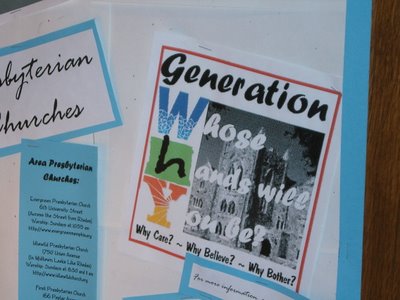
The other part of the post title is "Why?" The picture above was on one of the bulletin boards in the Faith and Service center at Rhodes College. I was so struck by the power of this poster, the others that were in the room, and the message that Rhodes sought to give about caring about community and those around us. I've sometimes heard the current generation of students referred to as the "Why?" generation. Maybe this is the reason - Whose hands will you be? Why care? Why believe? Why bother? Our friends from Minnesota were seeking the "Why?" The historic figures of Memphis were seeking the "Why?" And those of us who will ultimately make a difference in the world will unceasingly seek the "Why?" It's nice to know that we have company for the road.
One of the best parts of the "Plunge" is the fact that it is a great bonding time for the Scholar Leaders. It's odd that a group that lives together doesn't really take the time to bond on a regular basis unless they are taken away from campus and placed in an environment where they have nothing to concentrate on but each other. In additon to the bonding, we saw and experienced so many terrific things in Memphis. We met with representatives from their SmartCity initiative - an organization in Memphis and in select other cities that is focused on improving the community environment for "creatives" - young people who are educated, interesting, and bring many resources to urban communities. We visited the National Civil Rights Museum and experienced the evolution of the civil rights movement in the U.S.A. This museum culminates in a visit to the room where Martin Luther King, Jr., was assassinated in 1968. We worked with sick children at St. Jude Children's Research Hospital, visited Graceland to learn of Elvis' legacy, and we made a visit to the Rock and Soul Museum. We had a couple visits to Rhodes College, once to meet with the CODA Scholars, a group dedicated to advocating for the arts and the other visit was for a campus tour and the chance to learn about the way Rhodes connects faith journey and service.
You may have been trying to figure out how any of what you just read relates to the topic of this post - "Campaign for Community - Why?" It's because of two very powerful and connected perspectives that we encountered. Our group meal for Plunge was a visit to BB King's on Beal Street for a little BBQ. We did this with some of our Miami alum contacts before going to a live theater production of "Exonerated," a play about unjustly accused death row inmates. It wasn't the meal that was so great - it was the company - and unexpected company at that. While we were having dinner, four guys from the University of Minnesota (Brian, James, Drew, and Eric) wearing t-shirts that said "Campaign for Community" dropped by our table. I couldn't help but ask about their t-shirts... They said their t-shirts captured the essence of their 11-day trip over winter break. Their campaign involved following a path they had not planned. They were simply taking the path suggested by the people they encountered along the way. It took them to Iowa, Tennessee, Louisiana, Florida, Georgia, and Ohio. This was their way of understanding, engaging in, and building community. Having connected with us, we had the pleasure of hosting them and learning more about their terrific work when they visited Oxford last night and today.
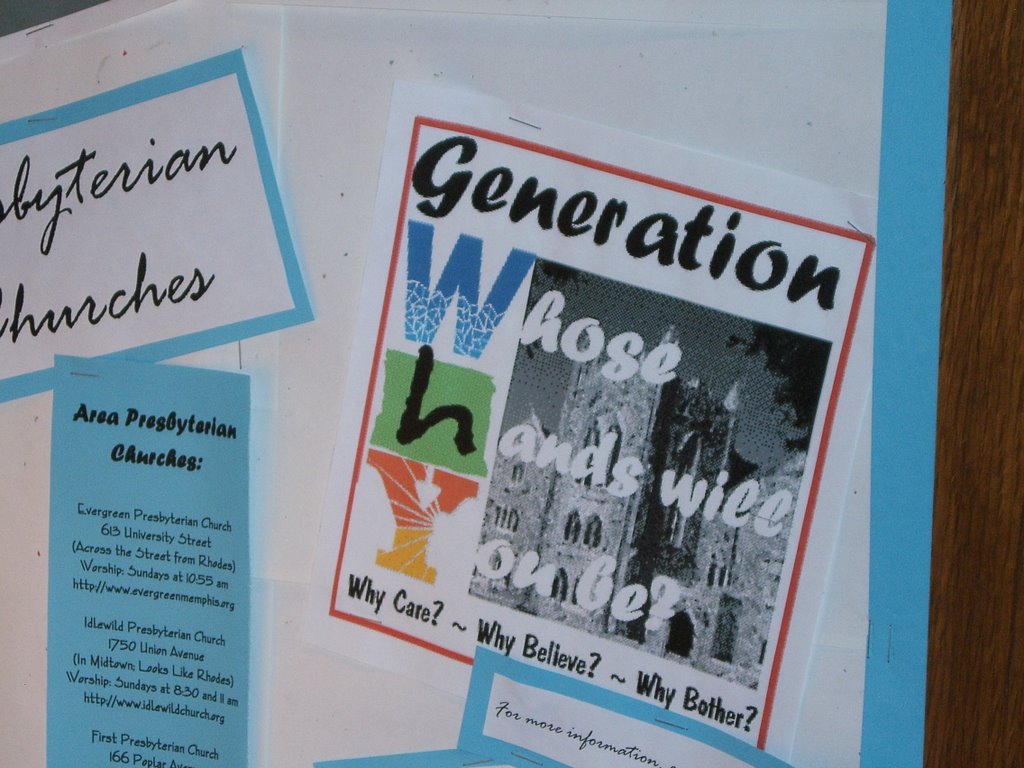
The other part of the post title is "Why?" The picture above was on one of the bulletin boards in the Faith and Service center at Rhodes College. I was so struck by the power of this poster, the others that were in the room, and the message that Rhodes sought to give about caring about community and those around us. I've sometimes heard the current generation of students referred to as the "Why?" generation. Maybe this is the reason - Whose hands will you be? Why care? Why believe? Why bother? Our friends from Minnesota were seeking the "Why?" The historic figures of Memphis were seeking the "Why?" And those of us who will ultimately make a difference in the world will unceasingly seek the "Why?" It's nice to know that we have company for the road.
Tuesday, January 02, 2007
Inconvenient truth

I'm back at work for the new year and getting ready to go on a learning and service trip with the Miami Scholar Leaders tomorrow. We are going to Memphis to do a variety of things including service at St. Jude Children's Hospital, visiting the National Civil Rights Museum, dropping by Graceland, and meeting with participants in the SmartCity movement that is underway. I'll post on the trip later but I had to offer a post on a film I saw during the holiday break - "Inconvenient Truth."
"Inconvenient Truth" is a documentary of Al Gore's lecture about global warming. It is an extremely sobering and jolting analysis of indicators that the Earth is in a very dangerous downward spiral of environmental conditions. The evidence Gore provides is difficult to dispute, even though some will interpret the film as politically motivated. I bought a copy of the film because I hope to encourage everyone I encounter to view it. We owe it to ourselves to become informed, affirm or dispute the evidence, and then take action. If the film is correct, the advance of global warming is faster than scientists expected and, while many of us thought the effects would not be seen until later generations, there is some evidence that global conditions are already showing the signs.
For more information, go to Inconvenient Truth for specifics, reviews, etc. There are lots of reasons why the U.S.A. doesn't want to recognize the possibility that Al Gore is correct. The U.S.A. and Australia are the only two developed countries who have been unwilling to adopt the Kyoto Accord, an initiative that would require more stringent greenhouse gas emissions controls. The oil producers and auto industry in the U.S.A. would be effected if the U.S.A. signed on to Kyoto. Signing would require them to begin exploring alternative fuels and it would require probably more fuel efficient and smaller autos and trucks. Requiring our U.S.A. manufacturers to face the reality that our industrial ignorance and arrogance only achieve short-sighted economic gain while selling future generations down the drain is one possibility. What other views about emissions control and global warming are available to us?
I would love to hear others' thoughts about "Inconvenient Truth" and the questions it raises. I do not claim expertise in this area but the film certainly got my attention.
Thursday, December 21, 2006
Preparing for Christmas back home
With last year having been such an adventure, it has been a little difficult getting in the spirit of Christmas. A year ago tonight we were in Florence and would be on our way to Rome and then to Venice for Christmas eve. It's a little hard to beat the glamour of that kind of Christmas. On the other hand, we really missed not seeing Devin, Steve, and Gram at Christmas and this year we'll all be together for a full week. Darbi is already here, Devin and Steve come tomorrow, and then we'll all go shopping and playing together on Saturday. We very much look forward to a wonderful celebration together.
I also have something to celebrate today that will make the holidays even more fun. The editor for Deeper Learning in Leadership made some recommendations for changes in November and I promised to turn them around with a new draft ready by January 15, 2007. To my utter shock, I finished the revisions today - almost a month ahead of time. I probably won't turn it in until January but it feels so great being able to look forward to time with the family with nothing hanging over my head. I also intend to return to practicing piano during the holiday and I can hardly wait. Darib has been taking piano lessons at Carnegie Mellon and I need to brush up so I can stay ahead of her.
I feel a deep sense of satisfaction tonight. I'm home, with loved-ones, preparing my mind and heart for the coming of Christmas - an absolutely wonderful time of year. I pray for the happiness and peace of all our family and friends. We have many treasures to be thankful for!
I also have something to celebrate today that will make the holidays even more fun. The editor for Deeper Learning in Leadership made some recommendations for changes in November and I promised to turn them around with a new draft ready by January 15, 2007. To my utter shock, I finished the revisions today - almost a month ahead of time. I probably won't turn it in until January but it feels so great being able to look forward to time with the family with nothing hanging over my head. I also intend to return to practicing piano during the holiday and I can hardly wait. Darib has been taking piano lessons at Carnegie Mellon and I need to brush up so I can stay ahead of her.
I feel a deep sense of satisfaction tonight. I'm home, with loved-ones, preparing my mind and heart for the coming of Christmas - an absolutely wonderful time of year. I pray for the happiness and peace of all our family and friends. We have many treasures to be thankful for!
Wednesday, December 13, 2006
December 13 - one year later
A year ago I was finalizing grades for my MUDEC class, doing laundry, packing, and temporarily closing down my blog. Tomorrow, December 14, Diane and Darbi would start their trek to Frankfurt, and December 15, we reunited and began our European extravaganza. It hardly seems possible!
So much has happened over the last year that has cemented my MUDEC and European experience in my memory. First of all, I'm so pleased that I started this "Pursuing Leadership" blog so that I could get back to all the ideas I've had and so that I could chart the journey of my discovery of Europe and leadership.
This experience brought to fruition a decade-long dream just last week. I keynoted the Leadership Educators' Institute in Arizona with the title of my remarks being Deeper Learning in Leadership. It was an incredible honor and opportunity to roll out the core ideas that will eventually be in print with the book. The participants' responses were very good and the ideas seemed to stimulate considerable dialogue through the rest of the conference. Preparation for the conference also helped me refine how some ideas were presented, which will help in completing the final revisions of the text by January 15, 2007.
I'm finishing up grading for the semester and then will dig into writing. I also hope to kick back a bit for the holidays. Last year was so incredible that only the deep warmth of being with my family could even begin to compare!
So much has happened over the last year that has cemented my MUDEC and European experience in my memory. First of all, I'm so pleased that I started this "Pursuing Leadership" blog so that I could get back to all the ideas I've had and so that I could chart the journey of my discovery of Europe and leadership.
This experience brought to fruition a decade-long dream just last week. I keynoted the Leadership Educators' Institute in Arizona with the title of my remarks being Deeper Learning in Leadership. It was an incredible honor and opportunity to roll out the core ideas that will eventually be in print with the book. The participants' responses were very good and the ideas seemed to stimulate considerable dialogue through the rest of the conference. Preparation for the conference also helped me refine how some ideas were presented, which will help in completing the final revisions of the text by January 15, 2007.
I'm finishing up grading for the semester and then will dig into writing. I also hope to kick back a bit for the holidays. Last year was so incredible that only the deep warmth of being with my family could even begin to compare!
Sunday, December 03, 2006
Vienna - one year later
I've been reliving my weekend in Vienna throughout the current weekend. Clearly, Vienna was one of my favorite European cities and it's hard to forget what an amazing visit I had. With adjustments for time zones, by now I was back in Differdange, moving into the final days of teaching, writing, and solitude.
Vienna was amazing because of the overwhelming history that took place there and the art which stands as a testament to Vienna's importance throughout Europe for 700 years - up to the dawn of the 21st century. I keep thinking back about when Diane and I can return. I loved Vienna in the winter, with its very short days, snow floating through the air, streets filled with fur-clad shoppers, and musicians in concerts halls and the streets. I want to go back in the summer as well to see its lush gardens, the Danube, and the outdoor environs made for all to enjoy.
Shifting to another of my favorite cities, I noticed a piece in the paper this morning about JFK's 1963 visit to Berlin. The piece informed of the opening of a new exhibit just at the threshold of the Brandenburg gates that is dedicated to JFK's visit. His visit was intended as a statement of support to Berlin after the USSR erected the Berlin Wall in 1961. Free Germans were fearful of being overtaken by Soviet power but JFK had the courage to go there and to proclaim, "Ich ben eine Berliner." His statement reflected that free citizens everywhere are connected to each other. This event still ranks as the top historical event of the past one hundred years for most Germans.
JFK and RFK's times were different - the cold war, civil rights, economic disparity... Or were they? Having seen "Bobby" this last week with my first-year leadership seminar students, I was deeply reminded of the turmoil of the 1960s. My belief is that we have reached another pinnacle time of turmoil in human history. The cold war, where outright military confrontation was avoided but unknown enemies lurked behind every headline, is strangely reminiscent of the war on terrorism. Gains acheived in the Civil Rights Act of 1954 are being challenged in a Supreme Court case moving to the national center stage tomorrow, 12-4-06. Economic disparity is at an all-time high in the U.S.A. Corporate CEO conpensation has risen at outrageous rates while downsizing requires layoffs and flat compensation for the working class.
There is a strange symetry among the random thoughts in this post this morning. The dynasty of the Habsburg family in Austria, the legacy of the Kennedy family as advocates for change while they occupied places of privilege, and the present struggle before us in finding politicians who are capable of the leadership we need to advance the human condition. These times may stir fear in our souls but they also enliven the quest for more adequate and, indeed, effective ways of understanding leadership. What kind of "leadership" do we need to engage citiznes in the complex negotiations of the modern day?
Vienna was amazing because of the overwhelming history that took place there and the art which stands as a testament to Vienna's importance throughout Europe for 700 years - up to the dawn of the 21st century. I keep thinking back about when Diane and I can return. I loved Vienna in the winter, with its very short days, snow floating through the air, streets filled with fur-clad shoppers, and musicians in concerts halls and the streets. I want to go back in the summer as well to see its lush gardens, the Danube, and the outdoor environs made for all to enjoy.
Shifting to another of my favorite cities, I noticed a piece in the paper this morning about JFK's 1963 visit to Berlin. The piece informed of the opening of a new exhibit just at the threshold of the Brandenburg gates that is dedicated to JFK's visit. His visit was intended as a statement of support to Berlin after the USSR erected the Berlin Wall in 1961. Free Germans were fearful of being overtaken by Soviet power but JFK had the courage to go there and to proclaim, "Ich ben eine Berliner." His statement reflected that free citizens everywhere are connected to each other. This event still ranks as the top historical event of the past one hundred years for most Germans.
JFK and RFK's times were different - the cold war, civil rights, economic disparity... Or were they? Having seen "Bobby" this last week with my first-year leadership seminar students, I was deeply reminded of the turmoil of the 1960s. My belief is that we have reached another pinnacle time of turmoil in human history. The cold war, where outright military confrontation was avoided but unknown enemies lurked behind every headline, is strangely reminiscent of the war on terrorism. Gains acheived in the Civil Rights Act of 1954 are being challenged in a Supreme Court case moving to the national center stage tomorrow, 12-4-06. Economic disparity is at an all-time high in the U.S.A. Corporate CEO conpensation has risen at outrageous rates while downsizing requires layoffs and flat compensation for the working class.
There is a strange symetry among the random thoughts in this post this morning. The dynasty of the Habsburg family in Austria, the legacy of the Kennedy family as advocates for change while they occupied places of privilege, and the present struggle before us in finding politicians who are capable of the leadership we need to advance the human condition. These times may stir fear in our souls but they also enliven the quest for more adequate and, indeed, effective ways of understanding leadership. What kind of "leadership" do we need to engage citiznes in the complex negotiations of the modern day?
Sunday, November 19, 2006
Espoused versus enacted theory
I just read the following post to the ILA listerv this morning (dated 11-8-06). It explores belief/theory as we espouse it versus what we act on.
_____________________________________
Before Rumsfeld was fired I published this on my website blog. Seems related to this discussion.
I was listening to an interview with NY Times journalist, Bob Woodward in which he spoke about how the self-confidence of Secretary of Defense, Donald Rumsfeld caused him to disregard the advice of his most senior Pentagon advisors about post-invasion Iraq. Woodward's impression is that Rumsfeld is very knowledgeable and charming, and that his intellect gives him a lot of self-confidence. The current violence in the middle east and Iraq is a testimony to the wisdom of his advisors.
Hearing this story set me off searching for what the leadership researchers and pundits have to say about self-confidence. Notably, they don't have much to say. What I did find, however, was quite a bit about self-esteem. I got to thinking that perhaps the reason many people like to defer to persons in leadership roles might stem from a confusion between self-esteem and self-confidence.
Self-confidence is an important attribute for leaders, and ironically real self-confidence relies on self-esteem. Too much self-confidence without self-esteem can easily turn into arrogance, dominance, power and control. When I think about the most able and competent leaders I've known, they all share a willingness to let go of control. It makes sense. When you really have confidence in something and you know in your heart and your gut it's right for you, your constituents and the context, its easier to give attention to what others have to say and to collaborate.
Chris Argyris, a former Yale University professor and the James Bryant Conant Professor of Education and Organizational Behavior at Harvard University studied formal organizational structures, control systems, and management on individuals and how they responded and adapted to them. He encouraged leaders and managers to have confidence in their actions by being willing to test what he called their espoused theory-of-action against their theory-in-use.
The relationship between 'espoused theory and theory-in-use is similar to the relationship beween grammar-in-use and speech. These relationships contain assumptions about self, others and context which constitute a microcosm of science in everyday life' The words we use to convey what we do or what we would like others to think we do, can then be called espoused theory. (Argyris & Schön 1974: 30) "When someone is asked how he would behave under certain circumstances, the answer he usually gives is his espoused theory of action for that situation. This is the theory of action to which he gives allegiance, and which, upon request, he communicates to others. However, the theory that actually governs his actions is this theory-in-use. "(Argyris and Schön 1974: 6-7).
Perhaps you're thinking to yourself, I'm sure I don't espouse one theory and do something else. You may be right. The best way to find out is to test your theory-of-action by asking others for feedback about the impact of your actions and behavior and comparing it to your true intentions. Don't be surprised if you find there's a difference. It's a well documented phenomenon of human nature that we do not see ourselves as others see us which helps explain alot of the confusion and discord in organizations and the world.
The lesson: when leading others, knowledge and pure intellect is both an asset and a liability. It gives us the confidence to take a stand so that others can have confidence in us. And it can also prohibit us from being open to sharing control and having confidence in others. When you are commited to your espoused intentions, honest feedback can be very helpful news about the effectiveness of your actions.
Lucy
Lucy E Garrick, M.A. WSD
NorthShore Group
Organization and Leadership Development
www.northshoregroup.net
Seattle, WA
_______________________________________
The last paragraph gets to the core of the question - When is intelligence and self-confidence an asset versus liability? Note to self - self-esteem informed by humility and respect for others is probably key to living with confidence that allows us to tap the intelligence and contribution of others.
_____________________________________
Before Rumsfeld was fired I published this on my website blog. Seems related to this discussion.
I was listening to an interview with NY Times journalist, Bob Woodward in which he spoke about how the self-confidence of Secretary of Defense, Donald Rumsfeld caused him to disregard the advice of his most senior Pentagon advisors about post-invasion Iraq. Woodward's impression is that Rumsfeld is very knowledgeable and charming, and that his intellect gives him a lot of self-confidence. The current violence in the middle east and Iraq is a testimony to the wisdom of his advisors.
Hearing this story set me off searching for what the leadership researchers and pundits have to say about self-confidence. Notably, they don't have much to say. What I did find, however, was quite a bit about self-esteem. I got to thinking that perhaps the reason many people like to defer to persons in leadership roles might stem from a confusion between self-esteem and self-confidence.
Self-confidence is an important attribute for leaders, and ironically real self-confidence relies on self-esteem. Too much self-confidence without self-esteem can easily turn into arrogance, dominance, power and control. When I think about the most able and competent leaders I've known, they all share a willingness to let go of control. It makes sense. When you really have confidence in something and you know in your heart and your gut it's right for you, your constituents and the context, its easier to give attention to what others have to say and to collaborate.
Chris Argyris, a former Yale University professor and the James Bryant Conant Professor of Education and Organizational Behavior at Harvard University studied formal organizational structures, control systems, and management on individuals and how they responded and adapted to them. He encouraged leaders and managers to have confidence in their actions by being willing to test what he called their espoused theory-of-action against their theory-in-use.
The relationship between 'espoused theory and theory-in-use is similar to the relationship beween grammar-in-use and speech. These relationships contain assumptions about self, others and context which constitute a microcosm of science in everyday life' The words we use to convey what we do or what we would like others to think we do, can then be called espoused theory. (Argyris & Schön 1974: 30) "When someone is asked how he would behave under certain circumstances, the answer he usually gives is his espoused theory of action for that situation. This is the theory of action to which he gives allegiance, and which, upon request, he communicates to others. However, the theory that actually governs his actions is this theory-in-use. "(Argyris and Schön 1974: 6-7).
Perhaps you're thinking to yourself, I'm sure I don't espouse one theory and do something else. You may be right. The best way to find out is to test your theory-of-action by asking others for feedback about the impact of your actions and behavior and comparing it to your true intentions. Don't be surprised if you find there's a difference. It's a well documented phenomenon of human nature that we do not see ourselves as others see us which helps explain alot of the confusion and discord in organizations and the world.
The lesson: when leading others, knowledge and pure intellect is both an asset and a liability. It gives us the confidence to take a stand so that others can have confidence in us. And it can also prohibit us from being open to sharing control and having confidence in others. When you are commited to your espoused intentions, honest feedback can be very helpful news about the effectiveness of your actions.
Lucy
Lucy E Garrick, M.A. WSD
NorthShore Group
Organization and Leadership Development
www.northshoregroup.net
Seattle, WA
_______________________________________
The last paragraph gets to the core of the question - When is intelligence and self-confidence an asset versus liability? Note to self - self-esteem informed by humility and respect for others is probably key to living with confidence that allows us to tap the intelligence and contribution of others.
Friday, November 10, 2006
Symmetric surprises
A year ago today I was on the train through Germany and down to Luzern, Switzerland. There were so many surprises on that trip - the first of my longer trips while I was traveling alone in Europe. The train ride was unexpectedly long, resulting in my arriving late in the evening. As I stumbled through the unfamiliar streets to find the place I planned to stay, I found another small hotel that ultimately ended up being an incredible find. When I opened my doors to the breath-taking view of Mount Pilatus on the horizon the next morning, I knew I had found heaven on earth.
Today is not only the 1st anniversary of my discovery of the Alps and the wonderful heritage of this region of the world, it is the 96th anniversary of Gustav Mahler's 1910 debut as the conductor of the New York Philharmonic. As I listened to the historical retrospective on WGUC this morning, I was not surprised to hear that Mahler chose to break the boundaries of conventionality of the NY Philharmonic by conducting a Bach piece from the piano (evidently something never done before in this setting). Mahler later wrote to a colleague back in Austria about how stunned the audience was and how this style added so much in new perspective to the performance.
The additional symmetry of these days is that Diane and I will attend the Cincinnati Symphony's performance of the Mahler Symphony #9 tomorrow night. This symphony is considered his fairwell to life and, in fact, he never heard it performed before his death in 1911. The 9th was composed, as most of Mahler's works, in his Austrian mountain retreat - a place where he could find solitude and reflection to give him the creative energy to engage with a public that for the most part did not understand him during his lifetime. Pavo Jarvi, who will conduct the 9th, said of this masterpiece that it explores the depths of human yearning for meaning, a kind of going to the edge of human experience. This Cincinnati Symphony concert is open and free of charge to Iraq War veterans and their families.
Mahler's life reflects both the blessing and burden of genius. He was beloved by some but dismissed by others. His days teetered back and forth between intense solitude and social engagement. His role in closing the Romantic era of music and ushering in true 20th century forms unquestionably qualify him as one of history's greatest leaders in music. Mahler's legacy also raises the question of how creativity and leadership balance in life's experience.
I heard a speaker at the International Leadership Association just last week (Dean Keith Simonton, author of Creativity in Science, Change, Logic, Genius, and Zeitgeist) who proposed that there are common constructs between creativity and leadership (i.e. both are based on achieving great impact), but that they are rarely both found in the same individuals. Simonton's conclusion still rests uncomfortably in my mind. Are creativity and leadership focused on achieving similar purposes yet unlikely companions in our lives?
Note (or question) to self - In an age where creativity and innovation are so important to discovering conditions necessary for the earth and its inhabitants to thrive, how can artistic, leadership, and other genius be fostered for the good of all?
Today is not only the 1st anniversary of my discovery of the Alps and the wonderful heritage of this region of the world, it is the 96th anniversary of Gustav Mahler's 1910 debut as the conductor of the New York Philharmonic. As I listened to the historical retrospective on WGUC this morning, I was not surprised to hear that Mahler chose to break the boundaries of conventionality of the NY Philharmonic by conducting a Bach piece from the piano (evidently something never done before in this setting). Mahler later wrote to a colleague back in Austria about how stunned the audience was and how this style added so much in new perspective to the performance.
The additional symmetry of these days is that Diane and I will attend the Cincinnati Symphony's performance of the Mahler Symphony #9 tomorrow night. This symphony is considered his fairwell to life and, in fact, he never heard it performed before his death in 1911. The 9th was composed, as most of Mahler's works, in his Austrian mountain retreat - a place where he could find solitude and reflection to give him the creative energy to engage with a public that for the most part did not understand him during his lifetime. Pavo Jarvi, who will conduct the 9th, said of this masterpiece that it explores the depths of human yearning for meaning, a kind of going to the edge of human experience. This Cincinnati Symphony concert is open and free of charge to Iraq War veterans and their families.
Mahler's life reflects both the blessing and burden of genius. He was beloved by some but dismissed by others. His days teetered back and forth between intense solitude and social engagement. His role in closing the Romantic era of music and ushering in true 20th century forms unquestionably qualify him as one of history's greatest leaders in music. Mahler's legacy also raises the question of how creativity and leadership balance in life's experience.
I heard a speaker at the International Leadership Association just last week (Dean Keith Simonton, author of Creativity in Science, Change, Logic, Genius, and Zeitgeist) who proposed that there are common constructs between creativity and leadership (i.e. both are based on achieving great impact), but that they are rarely both found in the same individuals. Simonton's conclusion still rests uncomfortably in my mind. Are creativity and leadership focused on achieving similar purposes yet unlikely companions in our lives?
Note (or question) to self - In an age where creativity and innovation are so important to discovering conditions necessary for the earth and its inhabitants to thrive, how can artistic, leadership, and other genius be fostered for the good of all?
Wednesday, October 25, 2006
First real day in Luxembourg - revisited 1 year later
Some events in our lives are so powerful that their anniversaries take us back to those moments in amazingly vivid detail. Such was my experience in going to Luxembourg one year ago. I just looked back when I started this blog and the October 25, 2005, post was "First real day in Luxembourg." I remember the disorientation, the excitement, the wonder of it all. It was a bright and beautiful day as it is in Oxford today. I went to the Universite du Luxembourg campus with several of the MUDEC faculty and we met with their faculty to see if there wasn't something we could explore together. A year later, it looks as if Universite du Luxembourg and MUDEC will combine efforts in the next couple of years and that MUDEC students will have the opportunity to engage more deeply with students from the Universite. I had nothing to do with the merger of purpose and place but it is kind of cool to know that I was there in some of the early stages of seeing this possibility.
I miss Luxembourg very deeply. It was a very difficult time for me in the early days (particularly the first 7-10 days) because I missed my routine, family, other relationships and I missed the familiarity of culture. As I grew more comfortable over time, I began to relish difference and newness. The result was that I took greater and greater risks over time - and I gained more with every bigger step I took.
Probably the most profound lesson I learned from Luxembourg was that taking risks is hard and sometimes terrifying but, if we face it with curiosity and trust in humanity, amazing things are possible. The metaphor of the Chesapeake Bay bluecrab may be instructive here. Bluecrab are wonderful and they primarily are found in the Chesapeake Bay from Baltimore out to the mouth of the Atlantic. One of the delicacies that is possible is the softshell crab, which results when a crab sheds its hardened shell because to retain it would be too restrictive for new growth. The urgency of growth becomes so great that the crab sheds its protective shell and becomes a softshell crab, ready to experience the world in new and grander ways. The only hooker on the proposition is that in this vulnerable state, there could be predators (like humans) who capture the crab during this tender, transitional state. To be caught in between the former hardened and secure hardshell and the growing, developing softshell state can mean ruin. However, if the crab wishes to develop, the risk to grow a new and more adequate shell must be tolerated.
Isn't that what many of our life experiences are about - risking to shed the hardened and inadequate in order to become something better? The vulnerable state in between is terrifying. Note to self - how can I become more comfortable in between and how can I be a protector for others as they embark on something dramatically different so that they feel enough shelter to take the risk?
I miss Luxembourg very deeply. It was a very difficult time for me in the early days (particularly the first 7-10 days) because I missed my routine, family, other relationships and I missed the familiarity of culture. As I grew more comfortable over time, I began to relish difference and newness. The result was that I took greater and greater risks over time - and I gained more with every bigger step I took.
Probably the most profound lesson I learned from Luxembourg was that taking risks is hard and sometimes terrifying but, if we face it with curiosity and trust in humanity, amazing things are possible. The metaphor of the Chesapeake Bay bluecrab may be instructive here. Bluecrab are wonderful and they primarily are found in the Chesapeake Bay from Baltimore out to the mouth of the Atlantic. One of the delicacies that is possible is the softshell crab, which results when a crab sheds its hardened shell because to retain it would be too restrictive for new growth. The urgency of growth becomes so great that the crab sheds its protective shell and becomes a softshell crab, ready to experience the world in new and grander ways. The only hooker on the proposition is that in this vulnerable state, there could be predators (like humans) who capture the crab during this tender, transitional state. To be caught in between the former hardened and secure hardshell and the growing, developing softshell state can mean ruin. However, if the crab wishes to develop, the risk to grow a new and more adequate shell must be tolerated.
Isn't that what many of our life experiences are about - risking to shed the hardened and inadequate in order to become something better? The vulnerable state in between is terrifying. Note to self - how can I become more comfortable in between and how can I be a protector for others as they embark on something dramatically different so that they feel enough shelter to take the risk?
Wednesday, October 11, 2006
The world as we know it is coming to an end - revisited
 "The world as we know it is coming to an end" may seem like a grim statement but it has great hope as well. This post is about death of apathy, ignorance, and complacency. It was stimulated by the October 1, 2006, sermon of Dr. Craig Barnes at Shadyside Presbyterian Church in Pittsburgh.
 There have always been those who predicted the end of time, the crumbling of humanity, and the hopelessness of our struggle against it. Faith allows those who seek it to see that the end of time means only that there is a new day seeking to come forth that will be better than all those that came before. Quoting Dr. Barnes, "It is the easiest thing in the world to say that things are getting bad, or the political and military options are not working, or those devoted to violence just keep coming. Yes, all of that is true." To pronounce doom and gloom may seem prophetic but it reflects only cynicism and an unwillingness to take responsibility to shape the world as we would like to see it. "If you want to be a leader in your part of the world, then say something unique and useful. Be a man or woman of hope who lives as if the story is not over yet. Not by a long shot."
 I combined these inspirational words with pictures taken by distant friend, Jake Brewer. Jake has traveled the world over and has an incredible store of pictures that demonstrate a world becoming - in every corner and especially through the hope in our children. (BTW - this post is noted as "revisited" because I looked back in my blog and found that I posted under the same topic almost a year ago. Sound like a theme?)
Friday, October 06, 2006
Social capital and healthy communities
I just looked back in my blog to see if I'd every posted anything on social capital and health in communities. I couldn't find one explicitly but the idea is certainly threaded in a number of the posts. The reason I thought I might have posted before is that this is such a constant theme as I seek to understand the connection between leadership and community.
Essentially the point is that one of the most important contributions of leadership is to enhance social capital within the community. Social capital is the degree to which all participants/members invest in the community. Investment can be the amount of time spent in community meetings, in service to the community, in talking positively about the members of the community, in making space for others to be part of the community. It's just like investing in a for-profit or not-for-profit entity; the investment doesn't appreciate unless there is ongoing attention, analysis, and enhanced commitment among those who hope to reap benefits from the organization.
A very challenging part of community life is that we are quick to seek the benefits of community but aren't willing to invest in order to reap the benefit. Thus, everyone wants to go to a great event, happening, or other privilege of a community, but far fewer members are willing to do the work to make it happen. The Scholar Leader community at Miami is a very interesting example. It is a great community of bright and interesting residents. Members want to benefit from having Scholar Leader on their resumes. They also want to benefit from the privileges of the scholarships, the programs, and the associations established through the community. However, it is a challenge when it comes to those who are willing to work to make all the good stuff happen.
One of the keys to effective community is providing flexibility for members to contribute on the topics and at the times they are able. There will never be a one-for-one exchange of investment to benefit. If everyone were to identify a contribution they can make, the equation would have a chance to balance out over time. So, for example, one member may come to all the community meetings and may get involved in planning the January Plunge trip. Another member may not come to community meetings but may be an individual who is frequently involved in late-night "bull" sessions or who is the "go to" person for a particular academic subject area. Are these two students contributing to and benefitting in the same ways? No. They do benefit in likely proportion to what they invest and this is fine. The problem is that sometimes those who are the higher investors get perturbed with the low investors and then resentment unfolds. When some members resent others for not participating, the stage for deteriorating community is set.
The "note to self" point here is that healthy communities result when the degree of social capital investment is increased. Equal contribution and benefit as well as comparable investment across members of the community is unrealistic in most settings. Learning to accept this and remaing open to the ebb and flow of member participation will go a long way to increasing the overall social capital investment and, hopefully, benefit to all.
Essentially the point is that one of the most important contributions of leadership is to enhance social capital within the community. Social capital is the degree to which all participants/members invest in the community. Investment can be the amount of time spent in community meetings, in service to the community, in talking positively about the members of the community, in making space for others to be part of the community. It's just like investing in a for-profit or not-for-profit entity; the investment doesn't appreciate unless there is ongoing attention, analysis, and enhanced commitment among those who hope to reap benefits from the organization.
A very challenging part of community life is that we are quick to seek the benefits of community but aren't willing to invest in order to reap the benefit. Thus, everyone wants to go to a great event, happening, or other privilege of a community, but far fewer members are willing to do the work to make it happen. The Scholar Leader community at Miami is a very interesting example. It is a great community of bright and interesting residents. Members want to benefit from having Scholar Leader on their resumes. They also want to benefit from the privileges of the scholarships, the programs, and the associations established through the community. However, it is a challenge when it comes to those who are willing to work to make all the good stuff happen.
One of the keys to effective community is providing flexibility for members to contribute on the topics and at the times they are able. There will never be a one-for-one exchange of investment to benefit. If everyone were to identify a contribution they can make, the equation would have a chance to balance out over time. So, for example, one member may come to all the community meetings and may get involved in planning the January Plunge trip. Another member may not come to community meetings but may be an individual who is frequently involved in late-night "bull" sessions or who is the "go to" person for a particular academic subject area. Are these two students contributing to and benefitting in the same ways? No. They do benefit in likely proportion to what they invest and this is fine. The problem is that sometimes those who are the higher investors get perturbed with the low investors and then resentment unfolds. When some members resent others for not participating, the stage for deteriorating community is set.
The "note to self" point here is that healthy communities result when the degree of social capital investment is increased. Equal contribution and benefit as well as comparable investment across members of the community is unrealistic in most settings. Learning to accept this and remaing open to the ebb and flow of member participation will go a long way to increasing the overall social capital investment and, hopefully, benefit to all.
Thursday, September 21, 2006
"Best"

I'm teaching two courses this fall - one a graduate seminar that complements students' supervised practice experience and the other a first-year seminar in leadership. The first round of papers and journals were due last week and I'm beginning to grade and return these to students. This exercise has stimulated some dialogue with my students, mainly around their disappointment that they did not receive higher grades. As I responded to a couple of students' e-mails this morning, I realized that the question of grades relates rather directly to something I include (without explanation) in much of my e-mail correspondence.
A couple of months ago, I started signing off "Best" on some/many of these messages. I have no idea if anyone notices this or not. It is not a casual statement; it means two things - 1) that I promise my best effort in helping others learn about leadership and 2) that I expect only the best of you and me as we seek to understand leadership. This blog is labeled "Pursuing Leadership by Denny," which is also a bit different than many blog titles. Pursuing leadership is a life-long passion for me. I seek to learn and I grow deeper in my understanding everyday. I also know that I am likely never to really understand. However, "Best" means a lot to me. I seek to understand and I hope that I have colleagues who will grant me the opportunity to continue to learn by being curious, by proposing ideas, by stumbling, and by learning to be as reflective as I can be. I appreciate all those who understand this quirky aspect of my personality and I hope I offer you always my "Best" effort on the journey.
Best to you today and always!
Friday, September 15, 2006
Lipman-Blumen on illusions of leadership
Another of my favorites posted a provocative statement to the ILA listserv. Jean Lipman-Blumen (http://www.cgu.edu/pages/1832.asp) said on 9-14-06:
Unfortunately, leaders tend to create the illusions that they sense the followers want to hear. Mostly, these are illusions about keeping us safe from harm/death, making us feel important, even heroic, inviting us into the center of action, and giving our lives meaning, etc. The tragedy of the human condition is not that we all die, but rather that we choose to live by illusions. And there are so many toxic leaders eagerly waiting to feed us grand illusions disguised as noble visions. That was part of the message in "The Allure of Toxic Leaders."
Cheers,
Jean Lipman-Blumen
Jean seems always to be able to hit the nail on the head. This is a challenge of both leadership and followership. Those of us who seek to provide leadership must search our souls deeply enough to determine why we seek to influence others - is it to make ourselves appear important and heroic or is it to help others feel powerful in shaping their own lives? When we are engaged in the all-important followership that may be even more important in some ways, are we careful in discerning the motivations and purposes of those we follow?
Unfortunately, leaders tend to create the illusions that they sense the followers want to hear. Mostly, these are illusions about keeping us safe from harm/death, making us feel important, even heroic, inviting us into the center of action, and giving our lives meaning, etc. The tragedy of the human condition is not that we all die, but rather that we choose to live by illusions. And there are so many toxic leaders eagerly waiting to feed us grand illusions disguised as noble visions. That was part of the message in "The Allure of Toxic Leaders."
Cheers,
Jean Lipman-Blumen
Jean seems always to be able to hit the nail on the head. This is a challenge of both leadership and followership. Those of us who seek to provide leadership must search our souls deeply enough to determine why we seek to influence others - is it to make ourselves appear important and heroic or is it to help others feel powerful in shaping their own lives? When we are engaged in the all-important followership that may be even more important in some ways, are we careful in discerning the motivations and purposes of those we follow?
Wednesday, September 13, 2006
Barbara Mossberg on cultural perspectives of leadership

The following text is from a listserv post on 9-10-06 by Barabara Mossberg, President Emerita of Goddard College and currently a Senior Scholar at the James McGregor Burns Academy of Leadership at the University of Maryland:
I noticed a different take on leadership qualities twenty years ago as a new dean of graduate studies at the University of Oregon. I had TA's from Asia and Europe who wanted to quit their jobs in the first two weeks (and mine), because the students were "not respectful." When, alarmed and dismayed, I asked how this was manifested, they replied, "they raise their hands to talk when I am speaking, they interrupt with questions, they come to my office to question the assignments, their grades. . . " I was relieved--"oh, they are acting as they have been trained since pre-school!" and inspired to create some programs for the whole University, graduate students and faculty, in which we all and each examined the cultural assumptions that go into teaching (for example) and the values we generate and invoke in our students that express cultural ideals that culminate in how we identify and nurture leaders. In the U.S., what are the historical forces that explain why we would encourage students to come up with "different" answers, raise our hands and otherwise "intervene" and "interrupt," establish themselves as unique, creative, even challenging presences in the learning environment, differentiate themselves proactively from other students, ourselves as faculty, and even the "authorities" whom we ask them to consider with critical thinking skills? We ask such questions in the context of learning how another culture might define academic excellence in terms of consensus and agreement fostering and perpetuating the teachings of the faculty and authorities, for example. What is to be gained by the approach in whatever country, and what cultural forces and history shape such educational approaches that nurture specific citizen values that ultimately apply to the kind of leadership we want? Each faculty member was asked to consider what traits make up a "good student" and what assignments and pedagogies reward those traits--and why. How does this reflect and continue to shape the culture? In increasingly diverse and multicultural and global classrooms, how can we understand and promote different kinds of understandings of "academic success?" How can we educate for the global arena in which different values are operant and collide? Thus I see particular opportunity in the graduate programs in which students from many countries participate, to consider these questions for a more internationally-conscious pedagogy.
On this note, in further work for American studies, I considered what forces led Americans to vote for what presidents they did, and what informed the national debates (Carter, Reagan, elder Bush, Clinton, etc.). I will share something from my own work on chaos theory and global leadership. I saw that Clinton was charged with being indecisive when in fact he seemed to be modeling complexity and other dynamic whole systems theories from emergent sciences in his decision-making processes. I gave lectures on his "round world" thinking in which issues were understood not in polarities, but in global terms of not either/or but an inclusive model of truths and realities that co-exist even as they conflict, compete, overlap, merge, collide, and contradict--just as earth appears at any moment from space, at once, simultaneously, wet and dry, dark and light, low and high, freezing and humid, etc. This sense of complexity, of "and . . and . . .and" I think was threatening, considered "indecisive" in a context of insecurity over multiplicity of an increasingly global and diverse world, increasingly interdependent, so that "this or that" approaches seemed more "decisive", even if this interpretation does not express the reality of a situation and in fact distorts it. We are reminded that it is only a relatively short time in which we have lived with knowledge of a "round world" and even more recent that we have images of ourselves from space that change the way we can see ourselves. Decisions one way or another are made, but how the public understands the forces shaping the decisions is tremendously important to understanding what "decisive" means. Where and when do we see issues looked at in terms of long-term results, for global stability and prosperity, based on what we learn from history!
This is a wonderfully rich example of why it is important to continue to examine our notions of learning and leadership. We come from different experiences and places and those differences profoundly impact our own choices and our views of the choices of others. Note to self - What unexamined notions are standing in my way of connecting with others in both learning and leadership?
Saturday, September 09, 2006
Kudos to Facebook's Mark Zuckerberg
With all the flurry of controversy around Facebook over the last several days, I have to comment on my blog in its relation to leadership. I was totally impressed with the apology and explanation Mark Zuckerberg offered in his posting to Facebook account holders. What I was amazed by was that he approached it as a textbook example of what to do when you screw up. Accepting responsibility, apologizing, and correcting our actions is one of the most difficult things to do in leadership. The tendency among some leaders is to justify, rationalize, excuse our behavior by suggesting that it is others' perception that created the offense. Another headline right now is Arnold's debacle with cultural stereotypes in his private meetings. In Arnold's case, he apologized but said in his quasi-apology "I am sorry that others took offense" rather than saying "I screwed up and apologize."
Mark Zuckerberg provided a wonderful example of accepting responsibility by apologizing in his very first paragraph. Then he went on to describe that he and his colleagues were too hasty in launching the new information feature on Facebook. He described how he and others are scrambling to rewrite the code to correct the mistake. Finally, he thanked Facebook account holders for their patience and reinforced the importance of open communication on Facebook and expressed appreciation to those who communicated their displeasure to him. These are precisely the kinds of behaviors that are needed in leadership. It reinforces confidence rather than undermines it. As a rather strange participant on Facebook (older, administrator, etc.), my support of Facebook is greater today than it was yesterday. Yes, Facebook has had some bad moments but those have mostly been the result of our use rather than Facebook's actions. Facebook provides a way to connect and to have some fun - it is our responsibility to use it appropriately.
Kudos to Mark and his team - I hope many Facebook account holders catch the leadership implication that we've just witnessed. Note to self - lessons about leadership can be found in the most interesting places...
Additional note on 9-22-06: I have been disappointed that Mark Zuckerberg and his team have not substantially modified the functionality that raised so much concern in the last two weeks. When I offered the comment above, Mr. Zuckerberg appeared to be demonstrating the best of leadership. At this point, the jury is still out.
Mark Zuckerberg provided a wonderful example of accepting responsibility by apologizing in his very first paragraph. Then he went on to describe that he and his colleagues were too hasty in launching the new information feature on Facebook. He described how he and others are scrambling to rewrite the code to correct the mistake. Finally, he thanked Facebook account holders for their patience and reinforced the importance of open communication on Facebook and expressed appreciation to those who communicated their displeasure to him. These are precisely the kinds of behaviors that are needed in leadership. It reinforces confidence rather than undermines it. As a rather strange participant on Facebook (older, administrator, etc.), my support of Facebook is greater today than it was yesterday. Yes, Facebook has had some bad moments but those have mostly been the result of our use rather than Facebook's actions. Facebook provides a way to connect and to have some fun - it is our responsibility to use it appropriately.
Kudos to Mark and his team - I hope many Facebook account holders catch the leadership implication that we've just witnessed. Note to self - lessons about leadership can be found in the most interesting places...
Additional note on 9-22-06: I have been disappointed that Mark Zuckerberg and his team have not substantially modified the functionality that raised so much concern in the last two weeks. When I offered the comment above, Mr. Zuckerberg appeared to be demonstrating the best of leadership. At this point, the jury is still out.
Thursday, August 31, 2006
The value of cultural proficiency
I had both a professional and personal revelation about the importance of cultural proficiency when I talked to my oldest daughter by telephone earlier this week. Devin is a Miami graduate in Marketing. After she completed her degree at Miami, she went on to pursue a culinary arts certificate from the Mid-West Culinary Institute, seeking to prepare herself for a career in catering and event management. During her Miami years, Devin worked at a local Oxford restaurant, first as a server and then as a manager. Her main involvements in college were her sorority and her work.
I provide Devin's background because at first blush you might think that Devin would not have had classes and experiences that prepared her for a multi-cultural world. The wonderful part of the story is that, indeed, she did. The proof of the acquired cultural proficiency she now has is that she now lives in Chicago and works for the Levy Corporation, a restaurant and catering/event organization. Her work is with an extremely diverse kitchen and catering staff, dealing with clients from every cultural and experiential background you can imagine. In the several months she has worked for Levy, Devin has planned and managed bar mitzvahs, weddings, funerals, and corporate dinners/receptions. She has become the person in the office to whom many of the more difficult cases are referred - culturally-based events, same-sex union ceremonies and receptions, or straight-laced business affairs. In all of these events, she exhibits leadership by helping others make decisions, by motivating others to do their best work, and by serving as a role model herself. My point is that Devin could not be successful unless she was responsive, respectful, and could relate to people from as broad a sweep of cultural backgrounds as you can imagine. To our delight and great pride, it is this very mix of people, the interesting nuance of relationships, and the fulfillment of service that has her calling us daily with stories we will never forget.
In all honesty, there wasn't much in Miami's classrooms that helped Devin gain cultural proficiency. Actually, it was living in Peabody Hall on the Western Campus as a first-year, working with a very diverse and connected staff in food and entertainment work, volunteering to take food left after her culinary classes to Over the Rhine in Cincinnati, and a curiosity and appreciation for people of all backgrounds. Cultural proficiency results from a breadth of experiences and can even be gained in the bubble of Miami and other places, regardless of our stereotypes about what these environments may or may not provide. I am only thankful that she was interested enough to welcome learning and that she is now putting what she learned to work in powerful and enjoyable ways!
Tuesday, August 29, 2006
Beginning the academic year with Retreats
I had the pleasure of exploring a number of leadership and community issues with student organizations this last weekend. Because both groups wanted to get a good start, the Associated Student Government (ASG) Cabinet and Scholar Leaders had back-to-back events with one retreating Friday/Saturday and the other Saturday/Sunday. I was a little tired upon my return to Oxford on Sunday afternoon. However, the net progress and momentum achieved by both groups was wonderful.
The ASG Cabinet retreat was designed to get the new team acquainted, introduce them to the unique strengths each brings to their work, and to begin the process of planning for the new year. Megan Fletcher designed the retreat and did a terrific job. One of the parts that I contributed was an interpretation of the StrengthsQuest instrument. This is an assessment designed by the Gallup organization and available in Miami's Career Exploration & Testing as one of our Leadership Assessments. The beauty of the StrengthsQuest is that it identifies 34 different strengths, five major strengths for each person who takes it. My experience with the instrument is that it is usually very on-target from students' perspective. It is also extremely helpful when looking at a team that needs to work together. Individuals and groups can look for the strengths they have and then focus their energy on utilizing the strengths and finding others who complement them. In addition to the StrengthsQuest, the Cabinet discussed what they can do to become a more effective organization. The challenge ASG always faces is how to be more responsive to student needs, to represent all students, and make the difference that students, faculty, and administration all desire.
The Scholar Leader retreat was the largest of the two retreats - involving 64 participants. This is a very diverse group that is learning to live and learn together. Scholar Leaders are given much greater latitude in designing who they will be and what they will do during the year. The staff role is focused to support students taking responsibility for their own learning and group development. I used the ideas of community advocated by Sharon Daloz-Parks - hearth, table, and commons to stimulate their thinking of how they would work together. The hearth, table, commons ideas can really help a group think of how they establish a welcoming place for all community members to explore the deeper questions of leadership. I intend to continue to revisit this question as we move through the year. One of the areas in which there may be interest is the idea of creating a convenant or honor statement among the Scholar Leaders. This could also lead to serving as a catalyst for the rest of the campus community, which would fulfill the aspiration of the Scholar Leaders impacting the broader Miami community.
The ASG Cabinet retreat was designed to get the new team acquainted, introduce them to the unique strengths each brings to their work, and to begin the process of planning for the new year. Megan Fletcher designed the retreat and did a terrific job. One of the parts that I contributed was an interpretation of the StrengthsQuest instrument. This is an assessment designed by the Gallup organization and available in Miami's Career Exploration & Testing as one of our Leadership Assessments. The beauty of the StrengthsQuest is that it identifies 34 different strengths, five major strengths for each person who takes it. My experience with the instrument is that it is usually very on-target from students' perspective. It is also extremely helpful when looking at a team that needs to work together. Individuals and groups can look for the strengths they have and then focus their energy on utilizing the strengths and finding others who complement them. In addition to the StrengthsQuest, the Cabinet discussed what they can do to become a more effective organization. The challenge ASG always faces is how to be more responsive to student needs, to represent all students, and make the difference that students, faculty, and administration all desire.
The Scholar Leader retreat was the largest of the two retreats - involving 64 participants. This is a very diverse group that is learning to live and learn together. Scholar Leaders are given much greater latitude in designing who they will be and what they will do during the year. The staff role is focused to support students taking responsibility for their own learning and group development. I used the ideas of community advocated by Sharon Daloz-Parks - hearth, table, and commons to stimulate their thinking of how they would work together. The hearth, table, commons ideas can really help a group think of how they establish a welcoming place for all community members to explore the deeper questions of leadership. I intend to continue to revisit this question as we move through the year. One of the areas in which there may be interest is the idea of creating a convenant or honor statement among the Scholar Leaders. This could also lead to serving as a catalyst for the rest of the campus community, which would fulfill the aspiration of the Scholar Leaders impacting the broader Miami community.
Thursday, August 24, 2006
Theory and practice of leadership
I am a listservant for the International Leadership Association. ILA is a pretty organization - one that is dedicated to understanding the dynamics of leadership in for profit, not for profit, political, educational and other organizations worldwide. A post to the listserv follows that I thought captured nicely the dilemma we face in relation to building the connection between theory and practice in leadership:
On many occasions the companies I worked with would seek out the latest fad or trend in business, presented by someone who had spent the last six years studying a tiny facet of business. They would tour the speaking circuit and visit our company, giving rise to the heroic business consultant, the savior of the latest knowledge. I can’t tell you how common it was to visit these conferences and hear the latest speaker tell us what changes needed to be made. For most of my friends who had attended, the problem was not in the content but in the constant chase for the new. We constantly felt like something new had to be learned when we hadn’t even finished what we just got. It made everyone’s eyes roll.
But on a rare occasion I felt like I had connected to those who had really discovered something. I felt this way with Jim Collins, and Peter Senge, and Clayton Christensen. These were academia that seemed to touch something much deeper in the organizational gene pool. I remember attending a conference with Collins. You could hear a pin drop...for an hour. They had discovered the fundamentals and presented them in a way that was accessible.
For business the real challenge is finding real and practical wisdom that is not so esoteric. The business manager has to pass these on. If the information is really good but it is too narrow, the audience becomes too small, and it becomes too hard to get people on board.
Contributed by Jonathan Brink August 23, 2006
So what do we make of the fact that so many of us are searching to understand and foster leadership? In our rush to to find something that can help others, we package things that perhaps are not applicable to anyone else, let alone mass translation to broad segments of our working and community worlds. I know that I am perceived (and this blog probably documents) that I am an idea person - always seeking to find some new idea that can help us understand leadership more fully. I also hope that I am a contributor to the difficult translation of theory to practice. If our theories can't help us be more effective, what use are they? I commit to redoubling my effort in translating theory in practical, meaningful, and transforming ways. Hold me accountable, fellow bloggers!
On many occasions the companies I worked with would seek out the latest fad or trend in business, presented by someone who had spent the last six years studying a tiny facet of business. They would tour the speaking circuit and visit our company, giving rise to the heroic business consultant, the savior of the latest knowledge. I can’t tell you how common it was to visit these conferences and hear the latest speaker tell us what changes needed to be made. For most of my friends who had attended, the problem was not in the content but in the constant chase for the new. We constantly felt like something new had to be learned when we hadn’t even finished what we just got. It made everyone’s eyes roll.
But on a rare occasion I felt like I had connected to those who had really discovered something. I felt this way with Jim Collins, and Peter Senge, and Clayton Christensen. These were academia that seemed to touch something much deeper in the organizational gene pool. I remember attending a conference with Collins. You could hear a pin drop...for an hour. They had discovered the fundamentals and presented them in a way that was accessible.
For business the real challenge is finding real and practical wisdom that is not so esoteric. The business manager has to pass these on. If the information is really good but it is too narrow, the audience becomes too small, and it becomes too hard to get people on board.
Contributed by Jonathan Brink August 23, 2006
So what do we make of the fact that so many of us are searching to understand and foster leadership? In our rush to to find something that can help others, we package things that perhaps are not applicable to anyone else, let alone mass translation to broad segments of our working and community worlds. I know that I am perceived (and this blog probably documents) that I am an idea person - always seeking to find some new idea that can help us understand leadership more fully. I also hope that I am a contributor to the difficult translation of theory to practice. If our theories can't help us be more effective, what use are they? I commit to redoubling my effort in translating theory in practical, meaningful, and transforming ways. Hold me accountable, fellow bloggers!
Sunday, August 20, 2006
Ahmad's War - Ahmad's Peace by Michael Goldfarb
Miami's first-year students are all in Oxford and the rest of the upperclass students are completing the process today and tomorrow. That means classes are on the horizon and the seriousness of academic pursuit is just around the corner.
Miami chooses a book each year for new students to read. The author then addresses the class and discussion groups follow under the guidance of faculty/staff and students. This year's book is Ahmad's War - Ahmad's Peace by Michael Goldfarb. I generally enjoy all these books so it's not unusual for me to resonate with the themes they include. However, this year, my imagination was stirred more than usual by this amazing story of an Iraqi citizen who lived through the dictatorship of Hussein, hoped for so much during the invasion of U.S.A. and British forces, worked so hard to help his fellow citizens learn how to engage in democracy, and then lost his life by assassination. This story is the epitome of leadership through acting on conviction. Not only is Ahmad's story one of conviction but the author as well. They both represent wonderful examples of what can happen both positively and tragically when we act on our convictions.
I don't mean to be morbid or melodramatic in this post. Most often, acting on our convictions does not lead to death. But, the fact is, in the more courageous circumstances, we don't know if our leadership might lead to assassination - by loss of life, loss of reputation, loss of stability, loss of privilege. There are so many kinds of losses that are possible. When we step up to leadership, the world has the potential of becoming a better place and we have the potential of immortalization because we stand for something. But even with these positive possibilities, there are devastating outcomes that can come to us at the hands of those who oppose our convictions. Most of us work toward compromises that keep others with us and work toward mutual goals and benefits. However, there are times when this is not possible and we don't really know when we might face one of these.
If leadership has the potential to take us places we don't want to go, then why would we want to go down that path? For starters, most of the paths will take us to positive places. In other cases, we won't know what lies beyond the twists and turns of the path. We are likely to start with an innocent perspective that is uninformed about the potential negative consequences. We cannot worry about the pessimistic outcomes or we would never act.
This afternoon, Nick Longo and I will speak to the Morris Hall "Leadership, Excellence, and Community" residents about how to begin the journey of leadership. I intend to use the Goldfarb book to position the topic and hope that students understand what I'm talking about. It's hard for 18 year olds to grasp the importance of leadership and the power they have within themselves. However, I think it's our responsibility to help them to begin taking themselves seriously and that, after all, is what being an educator is all about!

Miami chooses a book each year for new students to read. The author then addresses the class and discussion groups follow under the guidance of faculty/staff and students. This year's book is Ahmad's War - Ahmad's Peace by Michael Goldfarb. I generally enjoy all these books so it's not unusual for me to resonate with the themes they include. However, this year, my imagination was stirred more than usual by this amazing story of an Iraqi citizen who lived through the dictatorship of Hussein, hoped for so much during the invasion of U.S.A. and British forces, worked so hard to help his fellow citizens learn how to engage in democracy, and then lost his life by assassination. This story is the epitome of leadership through acting on conviction. Not only is Ahmad's story one of conviction but the author as well. They both represent wonderful examples of what can happen both positively and tragically when we act on our convictions.
I don't mean to be morbid or melodramatic in this post. Most often, acting on our convictions does not lead to death. But, the fact is, in the more courageous circumstances, we don't know if our leadership might lead to assassination - by loss of life, loss of reputation, loss of stability, loss of privilege. There are so many kinds of losses that are possible. When we step up to leadership, the world has the potential of becoming a better place and we have the potential of immortalization because we stand for something. But even with these positive possibilities, there are devastating outcomes that can come to us at the hands of those who oppose our convictions. Most of us work toward compromises that keep others with us and work toward mutual goals and benefits. However, there are times when this is not possible and we don't really know when we might face one of these.
If leadership has the potential to take us places we don't want to go, then why would we want to go down that path? For starters, most of the paths will take us to positive places. In other cases, we won't know what lies beyond the twists and turns of the path. We are likely to start with an innocent perspective that is uninformed about the potential negative consequences. We cannot worry about the pessimistic outcomes or we would never act.
This afternoon, Nick Longo and I will speak to the Morris Hall "Leadership, Excellence, and Community" residents about how to begin the journey of leadership. I intend to use the Goldfarb book to position the topic and hope that students understand what I'm talking about. It's hard for 18 year olds to grasp the importance of leadership and the power they have within themselves. However, I think it's our responsibility to help them to begin taking themselves seriously and that, after all, is what being an educator is all about!
Saturday, August 19, 2006
A needed break - #3
Chicago is all about hustle and action. We went shopping on the Miracle Mile, ate great sushi, saw the Robie House (first of Frank Lloyd Wright's "Prairie-style" designs).  The Robie house was so amazing because it was astounding how far ahead of its time it was. It was designed in 1908 and built in 1910. The house was only inhabited for 16 years by three owners and then was given to the University of Chicago. Not really appreciating the historical significance of the house, the University used the Robie House for a variety of purposes (including as a residence for students) until a preservation group asked for permission to restore it to its original design. The exterior of the house has been extensively repaired and they are just beginning the interior. The interior is characterized by wide open living spaces and hallway approaches which make these open areas very dramatic. The colors are earthy and natural and the out of doors is invited in through majestic stainglass windows. It is a truly amazing structure.
 One of our other favorite things to do was go to hear the symphony at Grant Park (night view to left). The Grant Park concerts are the only free outdoor concerts left in the U.S.A. There were probably 3,000 people picnicing and having a good time during the concert. Afterwards, we enjoyed "the Bean" and walked around the streets, feeling completely safe and secure in one of our nation's largest cities. Chicago's a great town with so much to offer and so many things to do.
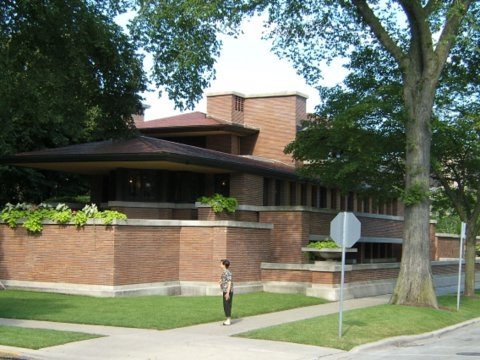 The Robie house was so amazing because it was astounding how far ahead of its time it was. It was designed in 1908 and built in 1910. The house was only inhabited for 16 years by three owners and then was given to the University of Chicago. Not really appreciating the historical significance of the house, the University used the Robie House for a variety of purposes (including as a residence for students) until a preservation group asked for permission to restore it to its original design. The exterior of the house has been extensively repaired and they are just beginning the interior. The interior is characterized by wide open living spaces and hallway approaches which make these open areas very dramatic. The colors are earthy and natural and the out of doors is invited in through majestic stainglass windows. It is a truly amazing structure.
 One of our other favorite things to do was go to hear the symphony at Grant Park (night view to left). The Grant Park concerts are the only free outdoor concerts left in the U.S.A. There were probably 3,000 people picnicing and having a good time during the concert. Afterwards, we enjoyed "the Bean" and walked around the streets, feeling completely safe and secure in one of our nation's largest cities. Chicago's a great town with so much to offer and so many things to do.
A needed break - #2
 When we got to Toronto, we struggled a bit in finding lodging because there was a Caribean Fest underway. However, we found a reasonable hotel that put us in an area close to museums, shopping, and some of the ethnic/cultural neighborhoods. The lesson of Toronto is that it is such an amazing collection of cultures. Everywhere you look there are people of different races, languages, religions, etc. It is a culture that seems to embrace all perspectives, if not easily at least comfortably.
 Makinac Island was very interesting in terms of historical significance. It has been preserved as a 19th century village with no cars - just horses and bicycles. It is very quaint and beautiful. It has a great deal of significance as a pivotal location between the U.S.A. and Canada.
Friday, August 11, 2006
A needed break - #1
Diane (wife), Darbi (youngest daughter), and I have been on vacation for the last ten days. We're wrapping it up with a visit with our oldest daughter (Devin) and her husband (Steve) in Chicago - to return August 13, 2006, to Oxford. We've had a great time and it has been quite renewing. The itinerary included Niagara Falls, Canada, Toronto, Makinac Island, and Chicago. We were basically trying to do something that would be drivable but would take us into areas that had a bit of an international flair. Yeah, I know... These places aren't terribly different than most of the U.S.A. but at least we could drive.
I'm not sure what we learned about leadership during our travels...
 Niagara Falls was pretty amazing in terms of the vision of harnessing the power of water to create a resource that provides electricity to so much of the northeast. The Canadian side is also very interesting as an economic center. Canada has really taken advantage of its proximity to the U.S.A. for tourism. The further you get away from Niagara Falls, there are more interesting things such as an area for wine production, water sports, commerce, and recreation/culture.
Pics and commentary continue on the next post...
I'm not sure what we learned about leadership during our travels...
 Niagara Falls was pretty amazing in terms of the vision of harnessing the power of water to create a resource that provides electricity to so much of the northeast. The Canadian side is also very interesting as an economic center. Canada has really taken advantage of its proximity to the U.S.A. for tourism. The further you get away from Niagara Falls, there are more interesting things such as an area for wine production, water sports, commerce, and recreation/culture.
Pics and commentary continue on the next post...
Sunday, July 30, 2006
Coming and going...
This is a very interesting time for me. There are a number of people who have been very important to me who are moving on to other things and there are others who are coming into my life. These comings and goings bring hope that we'll maintain the relationships that we've had and anticipation about what the new relationships will bring.
We went to a going away party for Ron Slepitza and his family last night (Saturday, 8-29-06). Ron and I have been colleagues for 32 years. Ron was actually the first grad student who I ever had the chance to work with. He was so totally into his masters work that he bugged me until I joined him in doctoral study at the University of Maryland. Ron and I have stayed in contact throughout the years. We've enjoyed being near each other for the last ten years but now he's moving on to the presidency of Avila College in Kansas City. Ron is very excited about his new work and will do a great job. But, we'll miss not having them close.
In addition to losing the immediate friendship of Ron and Suzanne, all the grad students with whom I worked over the last two years are now off on their own. Julie is married and working at UNC-Chapel Hill, Matt is working at the Kettering Foundation (it's easier for us to stay in contact), and Dave is off to Doha, Qatar, working for Carnegie Mellon University.
While these treasured friends are on their way, others are reentering or entering my life. Darbi (youngest daughter) just returned from an incredible 6 week wilderness and spiritual adventure in the Wind River Range of Wyoming. It was difficult having no contact with her for 6 weeks and what a relief to have her back. Liz Housholder is joining me in the next two weeks as a new grad student. Monica Ways and Nick Longo have just joined Miami as Directors of Community Engagement & Service and the Harry T. Wilks Leadership Institute, respectively. Both are unbelievable new colleagues who will make a huge difference at Miami.
This next Wednesday, Diane, Darbi, and I are off for a 10-day vacation up north. We're looking forward to being free of the press of regular life in Oxford (sounds impossible in the summer, doesn't it?). We'll be back just in time to begin the fall ramp-up week on August 14. If I have a chance to blog, I'll put some travel pictures up while we're gone. Otherwise, come back after the 14th for a look at what we did.
Comings and goings - part of the rhythm of life. The only thing that I've learned over time and that makes it easier to accept this ebb and flow is that the good ones are never really that far away!
We went to a going away party for Ron Slepitza and his family last night (Saturday, 8-29-06). Ron and I have been colleagues for 32 years. Ron was actually the first grad student who I ever had the chance to work with. He was so totally into his masters work that he bugged me until I joined him in doctoral study at the University of Maryland. Ron and I have stayed in contact throughout the years. We've enjoyed being near each other for the last ten years but now he's moving on to the presidency of Avila College in Kansas City. Ron is very excited about his new work and will do a great job. But, we'll miss not having them close.
In addition to losing the immediate friendship of Ron and Suzanne, all the grad students with whom I worked over the last two years are now off on their own. Julie is married and working at UNC-Chapel Hill, Matt is working at the Kettering Foundation (it's easier for us to stay in contact), and Dave is off to Doha, Qatar, working for Carnegie Mellon University.
While these treasured friends are on their way, others are reentering or entering my life. Darbi (youngest daughter) just returned from an incredible 6 week wilderness and spiritual adventure in the Wind River Range of Wyoming. It was difficult having no contact with her for 6 weeks and what a relief to have her back. Liz Housholder is joining me in the next two weeks as a new grad student. Monica Ways and Nick Longo have just joined Miami as Directors of Community Engagement & Service and the Harry T. Wilks Leadership Institute, respectively. Both are unbelievable new colleagues who will make a huge difference at Miami.
This next Wednesday, Diane, Darbi, and I are off for a 10-day vacation up north. We're looking forward to being free of the press of regular life in Oxford (sounds impossible in the summer, doesn't it?). We'll be back just in time to begin the fall ramp-up week on August 14. If I have a chance to blog, I'll put some travel pictures up while we're gone. Otherwise, come back after the 14th for a look at what we did.
Comings and goings - part of the rhythm of life. The only thing that I've learned over time and that makes it easier to accept this ebb and flow is that the good ones are never really that far away!
Thursday, July 20, 2006
Conclusions
I was thinking the other day about how I/we come to conclusions in our pursuit of leadership. It caused me to formulate a new signature for my e-mails that read, "Problems and challenges are always part of organization life. In the production-oriented rush of leadership, how do we restrain ourselves from formulating conclusions in search of evidence?" I wasn't really expecting anyone to pick up on my use of the statement until Deb Hackney, one of the Cluster Facilitators from session #2 of the LeaderShape Institute this summer, commented on it. Hmmh? Maybe this is something worth developing.
There are several influences that stimulated me to think about this. One is clearly Ron Heifetz' "adaptive leadership" model. I'm sure that Jean Lipman-Blumen's and Barbara Kellerman's books on bad leadership also influenced my thinking. My work experiences have also caused me to think how many times I encounter situations where it is clear that someone's perspective is already set. It may be provisional or not so provisional but, in these cases, the inclination is to scan for evidence that confirms the hunch - thus the "conclusions in search of evidence."
I realize that I am guilty of this in my own affairs. It is the stuff of which stereotype, biases, and patterned relationships are made. The very unfortunate impact of conclusions in search of evidence is that we generally seek evidence that only confirms our beliefs rather than the information that contradicts them. It seems to me that, when we engage in leadership, it is very important to attempt to escape the old models of leading based on leaders knowing the answers. When we move out of this positivist view, engaging with others through curious exploration, we help others to create their own conclusions and possibilities. We also tap others' talent, insight, and motivation rather than falling prey to simply looking for ways to subtly or not-so-subtly impose our agenda. When we resist the temptation of searching for evidence that reinforces our conclusions, we also avoid the more catastrophic potential of arriving at false-positive conclusions that could be devastating to us and others.
In "Blink" (Malcolm Gladwell) times, when things move so quickly and impressions are so powerful, it is extremely difficult to resist falling into the trap of searching to confirm our biases. But, because of the complexity of the times, it is even more imperative that we withhold judgment so that we can discern the field of the future - the new possibilities and insights that may not even be in our present consciousness. As Otto Scharmer and others have written, the field of the future is frequently not on the surface and obvious during our initial glance. The field of the future emerges as we allow ourselves to see new and contradicting evidence, or evidence that may be totally outside of the awareness that we've previously been able to access.
Note to self - How can I cultivate the pause between my conclusions and the evidence that flows to confirm them? Maybe this could be one of the primary ways to see the new possibilities that lie before me.
There are several influences that stimulated me to think about this. One is clearly Ron Heifetz' "adaptive leadership" model. I'm sure that Jean Lipman-Blumen's and Barbara Kellerman's books on bad leadership also influenced my thinking. My work experiences have also caused me to think how many times I encounter situations where it is clear that someone's perspective is already set. It may be provisional or not so provisional but, in these cases, the inclination is to scan for evidence that confirms the hunch - thus the "conclusions in search of evidence."
I realize that I am guilty of this in my own affairs. It is the stuff of which stereotype, biases, and patterned relationships are made. The very unfortunate impact of conclusions in search of evidence is that we generally seek evidence that only confirms our beliefs rather than the information that contradicts them. It seems to me that, when we engage in leadership, it is very important to attempt to escape the old models of leading based on leaders knowing the answers. When we move out of this positivist view, engaging with others through curious exploration, we help others to create their own conclusions and possibilities. We also tap others' talent, insight, and motivation rather than falling prey to simply looking for ways to subtly or not-so-subtly impose our agenda. When we resist the temptation of searching for evidence that reinforces our conclusions, we also avoid the more catastrophic potential of arriving at false-positive conclusions that could be devastating to us and others.
In "Blink" (Malcolm Gladwell) times, when things move so quickly and impressions are so powerful, it is extremely difficult to resist falling into the trap of searching to confirm our biases. But, because of the complexity of the times, it is even more imperative that we withhold judgment so that we can discern the field of the future - the new possibilities and insights that may not even be in our present consciousness. As Otto Scharmer and others have written, the field of the future is frequently not on the surface and obvious during our initial glance. The field of the future emerges as we allow ourselves to see new and contradicting evidence, or evidence that may be totally outside of the awareness that we've previously been able to access.
Note to self - How can I cultivate the pause between my conclusions and the evidence that flows to confirm them? Maybe this could be one of the primary ways to see the new possibilities that lie before me.
Thursday, July 06, 2006
Native American perspectives on education in the U.S.A.
A good friend, Anne Magnan, read the previous posts regarding LeaderShape and the difference in cultural perspectives expressed by native American students who attended the Institute in June. Inside Higher Education included a June 30 article on "Shoe Leather Recruiting," an analysis of why native American students mistrust education. "Education was used to force assimilation in an organized government fashion," noted Cynthia Lindquist, president of Cankdeska Cikana (Little Hoop) Community College in N.D. "There's that whole Great White Father myth that we live with, and educated Indians are sometimes seen as 'thinking they're better' than reservation Indians." Native populations have the lowest college graduation rate of all student groups in the U.S.A., an example being California, which has 200,000 native Americans in the state yet only 2,850 enrolled in the Cal state system. The article goes on to explain that native Americans have been told by their elders and family members of the required boarding schools of the 19th and 20th centures, where Indians were forced to leave their culture behind by adapting to the standards of the European settlers who took over their land.
Universities that have been successful in increasing the success of native students have established relationships with specific tribes, a model embraced by Miami University in its relationship with the Miami tribe that inhabited Ohio and Indiana prior to settlement. A key issue in attracting and retaining some tribal students is the idea of returning to their communities. In an attempt to protect their heritage and maintain a critical mass in their tribes, some native Americans fear that going to college and receiving a degree will result in their not returning to their family and communities. Finding ways to enhance career opportunities in tribal communities through education institutions that prepare young adults for these prospects is key. While a progressive view would embrace the idea that all citizens would have the opportunity to pursue education and careers wherever they liked, providing opportunities to gain education, improving one's standard of living, and maintaining one's cultural heritage is also valid and critical if the presence of native peoples is to be maintained in North America.
Universities that have been successful in increasing the success of native students have established relationships with specific tribes, a model embraced by Miami University in its relationship with the Miami tribe that inhabited Ohio and Indiana prior to settlement. A key issue in attracting and retaining some tribal students is the idea of returning to their communities. In an attempt to protect their heritage and maintain a critical mass in their tribes, some native Americans fear that going to college and receiving a degree will result in their not returning to their family and communities. Finding ways to enhance career opportunities in tribal communities through education institutions that prepare young adults for these prospects is key. While a progressive view would embrace the idea that all citizens would have the opportunity to pursue education and careers wherever they liked, providing opportunities to gain education, improving one's standard of living, and maintaining one's cultural heritage is also valid and critical if the presence of native peoples is to be maintained in North America.
Saturday, June 24, 2006
Concluding LeaderShape '06
The week is finishing out in extraordinary ways. The LeaderShape Revue tonight was one of the most heart-felt and hilarious of any I've every seen. All five Family Clusters had very fun skits that captured all sorts of moments nad memories from the week. It was very clear that all students have enjoyed the week and that the experience has been very good for them.
I met with the native student participants this afternoon to hear their suggestions about the future of LeaderShape with tribal colleges. They are very excited about continuing the partnership with LeaderShape but they are asking for modifications in the curriculum that embrace native philosophy and perspectives. The core assumptions of the program are not at odds, just the interpretation of some issues. The biggest point is that native perpsectives are simply not recognized or incorporated into the curriculum. After the discussion, I am convinced that the curriculum must be changed before offering it again for native students.
Star Power had a profound impact on all participants. The simulation seemed not to be having much impact until the latter part of the debriefing. At this point, a white student commented that all any group needed to do was to work hard and that the reward would be advancement and, in essence, the American dream. At first, one of the African American students responded that the comment did not recognize the complexity of American society nor did it recognize the generations of neglect of people of color in the U.S. A native participant followed who more directly addressed the assertion that everyone had opportunity. She said that for 500 years native citizens have been marginalized and pushed into poverty. The result of this is deep deprivation and hopelessness that makes the American dream impossible. She also said that, even as she defended native people, she felt that she betrayed her people by revealing the plight of tribal groups to white and privileged participants. The interaction was profound and brought an evening of struggle and striving, the likes of which I've seldom seen.
The conclusion of the interactions and the journey for us all is that much learning occured. Not without pain and struggle. But learning did occur.
I met with the native student participants this afternoon to hear their suggestions about the future of LeaderShape with tribal colleges. They are very excited about continuing the partnership with LeaderShape but they are asking for modifications in the curriculum that embrace native philosophy and perspectives. The core assumptions of the program are not at odds, just the interpretation of some issues. The biggest point is that native perpsectives are simply not recognized or incorporated into the curriculum. After the discussion, I am convinced that the curriculum must be changed before offering it again for native students.
Star Power had a profound impact on all participants. The simulation seemed not to be having much impact until the latter part of the debriefing. At this point, a white student commented that all any group needed to do was to work hard and that the reward would be advancement and, in essence, the American dream. At first, one of the African American students responded that the comment did not recognize the complexity of American society nor did it recognize the generations of neglect of people of color in the U.S. A native participant followed who more directly addressed the assertion that everyone had opportunity. She said that for 500 years native citizens have been marginalized and pushed into poverty. The result of this is deep deprivation and hopelessness that makes the American dream impossible. She also said that, even as she defended native people, she felt that she betrayed her people by revealing the plight of tribal groups to white and privileged participants. The interaction was profound and brought an evening of struggle and striving, the likes of which I've seldom seen.
The conclusion of the interactions and the journey for us all is that much learning occured. Not without pain and struggle. But learning did occur.
Friday, June 23, 2006
LeaderShape 06 at Allerton
I'm in Illinois this week (June 19-25) working as one of the two Lead Facilitators for the LeaderShape Institute. I have a lull in the schedule and thought I'd use the moment to reflect on my experience over the last week. As a framing perspective - it has been a challenging and incredible week.
This is the third year I've been Lead for the most diverse Institutes LeaderShape has. The American Indian College Fund (through the support of Coca-Cola) has been sending delegations of native students to Illinois for LeaderShape. This year we have almost twenty of our 64 students from tribal colleges. It is a truly amazing experience because there literally is no majority at the Institute. For whatever reason, the tensions over culture are stronger this year and I don't know exactly how this will all turn out. I trust the LeaderShape curriculum enough to believe that we will go where we need to go, but it's not easy.
One of the primary issues is the tension over cultural expectations. The native participants believe that some of the white students don't really get the point of what it means to be open to the culture of someone else. Specifically, the communication patterns among native students is more reserved and respectful. When in discussions, the native students are taught to speak only when they have listened carefully to others and when they have discerned something worth sharing with the rest of the group. The white students are more assertive - talking on top of each other, breaking in, and competing for group visibility. The difference in the cultures inevitably results in the native participants being locked out of communication. Some white students are more sensitive but others are very intolerant about the quiet nature of native participants. Their belief is that, if they have something to say, they should fight for the chance. As you might expect, these dynamics are not easy to handle.
Another cultural difference is between the Greek and native participants. The Greek organization members like to bring the topic of discussion to their own issues and they don't really try to connect to the points of other groups. The amazing thing about this is that the challenges of native peoples in their tribes and communities are actually quite similiar to the tribes or clans of fraternities. In fact, one of the greatest tensions in tribal groups is between "gaming" and "non-gaming" tribes, meaning the difference between those with and without casinos. While casinos raise the standard of living and visibility of tribal groups, they tend to draw natives away from the core culture of their people. In fraternities, the shift to larger memberships, centered around social conduct, separates the "social" from the "non-social" fraternities. While the social groups tend to be more visible, popular, and have larger memberships, they also are the groups that lose their core values and purposes, and therefore, contribute to the disintegration of the historic culture of Greek organizations. This link is fascinating to me but remains primarily unrecognized and unappreciated by Greek student participants. The native participants totally understand (probably the result of age and maturity).
Note to self - take back the idea of the similarity between native and fraternal groups and try to understand the dynamics with which both struggle. Perhaps they share a common strategy or solution to their struggles.
This is the third year I've been Lead for the most diverse Institutes LeaderShape has. The American Indian College Fund (through the support of Coca-Cola) has been sending delegations of native students to Illinois for LeaderShape. This year we have almost twenty of our 64 students from tribal colleges. It is a truly amazing experience because there literally is no majority at the Institute. For whatever reason, the tensions over culture are stronger this year and I don't know exactly how this will all turn out. I trust the LeaderShape curriculum enough to believe that we will go where we need to go, but it's not easy.
One of the primary issues is the tension over cultural expectations. The native participants believe that some of the white students don't really get the point of what it means to be open to the culture of someone else. Specifically, the communication patterns among native students is more reserved and respectful. When in discussions, the native students are taught to speak only when they have listened carefully to others and when they have discerned something worth sharing with the rest of the group. The white students are more assertive - talking on top of each other, breaking in, and competing for group visibility. The difference in the cultures inevitably results in the native participants being locked out of communication. Some white students are more sensitive but others are very intolerant about the quiet nature of native participants. Their belief is that, if they have something to say, they should fight for the chance. As you might expect, these dynamics are not easy to handle.
Another cultural difference is between the Greek and native participants. The Greek organization members like to bring the topic of discussion to their own issues and they don't really try to connect to the points of other groups. The amazing thing about this is that the challenges of native peoples in their tribes and communities are actually quite similiar to the tribes or clans of fraternities. In fact, one of the greatest tensions in tribal groups is between "gaming" and "non-gaming" tribes, meaning the difference between those with and without casinos. While casinos raise the standard of living and visibility of tribal groups, they tend to draw natives away from the core culture of their people. In fraternities, the shift to larger memberships, centered around social conduct, separates the "social" from the "non-social" fraternities. While the social groups tend to be more visible, popular, and have larger memberships, they also are the groups that lose their core values and purposes, and therefore, contribute to the disintegration of the historic culture of Greek organizations. This link is fascinating to me but remains primarily unrecognized and unappreciated by Greek student participants. The native participants totally understand (probably the result of age and maturity).
Note to self - take back the idea of the similarity between native and fraternal groups and try to understand the dynamics with which both struggle. Perhaps they share a common strategy or solution to their struggles.
Wednesday, June 14, 2006
Getting back to blog
I really miss not taking the time to reflect on my leadership journey on my blog. One of the "notes to self" of the last year is that I now realize how powerful times of solitude and reflection can be. The time in Luxembourg was a luxury that I've never had before - time to be with myself, reading, thinking, and writing. The reason that the adjustment to more private time was so difficult was the fact that I'd literally never done it before! Although I tried to keep the lessons of Luxembourg alive, I slipped back into old patterns in my work and quickly became consumed again. I'm coming back to see if I can reestablish balance between reflecting and acting.
The most positive part of the last six months is that I completed the manuscript for Deeper Learning in Leadership. As of June 1, the full text was off to Jossey-Bass for reviewer and editor feedback. Once Miami closed for the spring, I returned to voraciously complete the chapters that remained incomplete. With the tolerance of my wife, Diane, and the assistance of two great graduate students, Julie and Kari, I bull-dozed through the manuscript. Once I receive feedback I'll return for revisions but, for the moment, the book is out of sight and out of mind. I would never have completed this labor of love had it not been for Luxembourg!
Since the manuscript was completed, I've returned to catching up with work and family matters. One of the personal highlights of recent weeks was Darbi's graduation from Carnegie Mellon University. The picture below is of Devin, Diane, and Darbi during this wonderful weekend.
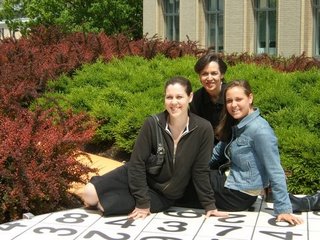
Devin and Steve joined us from Chicago for a full weekend of family celebration as Darbi graduated with College and University honors, Mortar Board, and Phi Beta Kappa. She's now off to the Wind River Ridge of Wyoming for a 6-week wilderness and spiritual adventure.
One of the new additions to the Carnegie campus was the focus of considerable conversation over commencement weekend - Reaching for the Sky. This is a brand new sculpture created by an alumnus. This particular sculpture reminds me so much of Darbi, Devin, and Steve as they begin their adult lives. Depending on your vantage point, Reaching for the Sky is endless, breathless, unknowable, and many other discriptors. Who knows where we'll be and what we'll ultimately do in life? As young people, family, friends, and students - the possibilities are endless.
The most positive part of the last six months is that I completed the manuscript for Deeper Learning in Leadership. As of June 1, the full text was off to Jossey-Bass for reviewer and editor feedback. Once Miami closed for the spring, I returned to voraciously complete the chapters that remained incomplete. With the tolerance of my wife, Diane, and the assistance of two great graduate students, Julie and Kari, I bull-dozed through the manuscript. Once I receive feedback I'll return for revisions but, for the moment, the book is out of sight and out of mind. I would never have completed this labor of love had it not been for Luxembourg!
Since the manuscript was completed, I've returned to catching up with work and family matters. One of the personal highlights of recent weeks was Darbi's graduation from Carnegie Mellon University. The picture below is of Devin, Diane, and Darbi during this wonderful weekend.

Devin and Steve joined us from Chicago for a full weekend of family celebration as Darbi graduated with College and University honors, Mortar Board, and Phi Beta Kappa. She's now off to the Wind River Ridge of Wyoming for a 6-week wilderness and spiritual adventure.
One of the new additions to the Carnegie campus was the focus of considerable conversation over commencement weekend - Reaching for the Sky. This is a brand new sculpture created by an alumnus. This particular sculpture reminds me so much of Darbi, Devin, and Steve as they begin their adult lives. Depending on your vantage point, Reaching for the Sky is endless, breathless, unknowable, and many other discriptors. Who knows where we'll be and what we'll ultimately do in life? As young people, family, friends, and students - the possibilities are endless.
Wednesday, March 22, 2006
Miami University Dolibois European Center Recycle Mania

I'm delighted to report on the fantastic new recycling initiative taken on by Dr. Kay Sloan's "Literature of Social Activism and Change" class in Luxembourg. This initiative is based on a commitment to put thought and action together in active learning. The students read Giono's The Man Who Planted Trees and then used this inspiring short story as a back-drop for action designed to save the environment. The story tells of a man who single-handledly restores the natural environment in the Provence area of France following the devastation of war at the beginning of the 20th century. It is a story of a simple man who takes simple and purposeful action, thereby returning Provence to the natural beauty it is now widely known to reflect.
Hats off to Dr. Sloan and her students for tackling a real issue, actively engaging in learning, and helping to make the world a better place.
Pretty phenomenal
I've just returned from back-to-back conferences of the National Association of Student Personnel Administrators and the American College Personnel Association. The first conference was actually during Miami's spring break so it didn't interfere with work. ACPA overlapped Monday and Tuesday and then I came home early so that I could begin catching up Wednesday (today, March 22). I saw many, many good friends and colleagues over the last two weeks. It reminded me how rich and full my life is - richly filled with imaginative and committed professionals and full of support and encouragement. A picture of three of my most important life supporters is to the right/below - Linda Clement (University of Maryland), Ron Slepitza (Xavier University), and of course Diane (wife).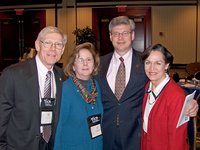
I had a pinnacle experience Monday when I received the Esther Lloyd-Jones Professional Service Award at ACPA. This was something that, in many ways, I don't feel I deserved. As a friend said to me - I should just enjoy it and be grateful so I will. I've spent a good deal of time studying Esther during my professional career. In addition, I've sought to bring her name back into regular discussion in student affairs work. It's deeply gratifying to hear her name more often these days. She was a woman of sweeping proportion and genius. She was one of the founders, if not the principle imagination, who inspired the work I am so blessed to fulfill. I was humbled and will never forget the moment that her presence became part of me - March 20, 2006. A picture of Susan Komives, the person who initiated my nomination for the award is to the left/below. Susan also received the ACPA Contribution to Knowledge Award this year as well as the NASPA award for the same.
During her memorial service on December 7, 1991, Donald Cutler, Esther's minister said of her, "I heard it said once that she wasn't necessarily at the superior level with respect to having common sense and I was reassured to hear it because I have precious little myself and cherish confirmation that one can survive, indeed prosper - without it. Her feminism was deep and balanced. Ahead of its time and not adversarial or bitter. Through her accomplishments one sees what a frequent mentor she was, and she bore the stuff of all great mentors -- that they are not competitive but rather luxuriate in the accomplishments of their proteges."
This memorial statement and the life Esther lived is an inspiration to me and I only hope to fulfill a small portion of the model of professional and personal presence Esther left as her legacy.

I had a pinnacle experience Monday when I received the Esther Lloyd-Jones Professional Service Award at ACPA. This was something that, in many ways, I don't feel I deserved. As a friend said to me - I should just enjoy it and be grateful so I will. I've spent a good deal of time studying Esther during my professional career. In addition, I've sought to bring her name back into regular discussion in student affairs work. It's deeply gratifying to hear her name more often these days. She was a woman of sweeping proportion and genius. She was one of the founders, if not the principle imagination, who inspired the work I am so blessed to fulfill. I was humbled and will never forget the moment that her presence became part of me - March 20, 2006. A picture of Susan Komives, the person who initiated my nomination for the award is to the left/below. Susan also received the ACPA Contribution to Knowledge Award this year as well as the NASPA award for the same.
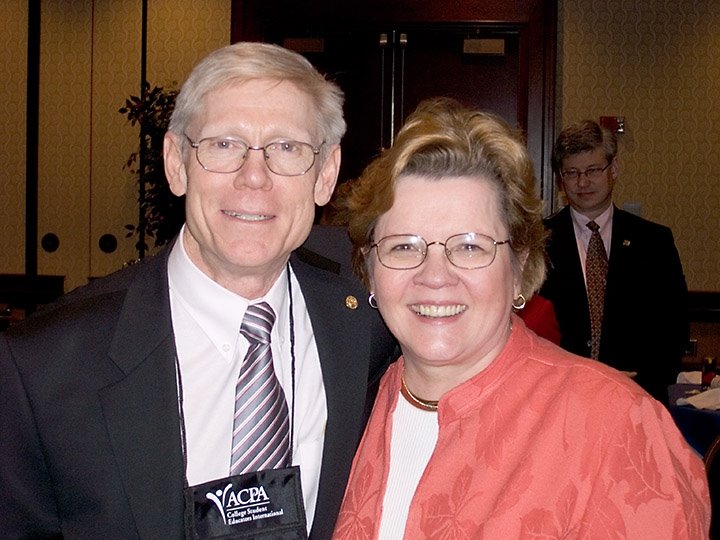
During her memorial service on December 7, 1991, Donald Cutler, Esther's minister said of her, "I heard it said once that she wasn't necessarily at the superior level with respect to having common sense and I was reassured to hear it because I have precious little myself and cherish confirmation that one can survive, indeed prosper - without it. Her feminism was deep and balanced. Ahead of its time and not adversarial or bitter. Through her accomplishments one sees what a frequent mentor she was, and she bore the stuff of all great mentors -- that they are not competitive but rather luxuriate in the accomplishments of their proteges."
This memorial statement and the life Esther lived is an inspiration to me and I only hope to fulfill a small portion of the model of professional and personal presence Esther left as her legacy.
Thursday, March 16, 2006
Holy discontent
I haven't posted on my blog for about a month - sorry for those who might be watching. Miami activities have kept me very busy and preoccupied. I have struggled to return to writing Deeper Learning in Leadership but plan to begin again today. I had a couple of other writing projects that had to take precedence so I had little choice.
I recently attended the National Association of Student Personnel Administrators convention in D.C. I had a very interesting time attending sessions, greeting long-standing friends, and watching where student affairs is as a field. My roommate was Ron Slepitza, a fellow graduate school colleague who has been a life-long friend. I also caught up with Dave Doyle, a former Miami ASG President. One of the sessions I found most interesting was one on "Discovering a Calling: How Colleges Enable Students to Discover Meaning and Purpose." I went to this session partially to see if they were aware of either Sharon Daloz Parks' or Senge et al's work. Parker Palmer was referenced but not the others. In some ways I was surprised but in other ways I was not. Hopefully, Deeper Learning in Leadership will help bring these other names into common awareness. The point of the session was that college students are more interested in spiritual journey and the discovery of purpose these days. No one seems to be able to determine why but perhaps that doesn't matter. The shift to greater interest in finding purpose is something that educators should embrace but exactly how we do this is the question.
One of the ideas that Frank Shushok from Baylor mentioned was that their programs foster "holy discontent." Actually, I don't know if the spelling should be "holy" or "wholly." Either would work. What he was saying is that, in order for students to discover things that really matter to them, they need to become discontent with something in the world - discontent enough that they will give theit best talent, time and energy to resolve it. This concept is very similar to Senge et al's "presencing" process and it is also related to Parks' admonition to nurture big questions and worthy dreams (check former blog posts on these topics). I don't know if Baylor's "wholly" was one based on the notion of "entire" or "complete" dissatisfaction or if it was "holy," meaning that there is something that is deeply spiritually compelling about it. Perhaps Baylor is attempting to foster both and they would both likely be relevant.
This idea left me wondering about my own holy/wholly discontent - what is it and how far will it take me? It also left me wondering how I might stimulate this level of discontent in others. Further, what can I do to respond to others' discontent? Sometimes discontent is a very powerful thing and not easy to deal with. I know what it feels like to have students, staff, and others who are dissatisfied with something. Particularly when it's something about which I'm not particularly annoyed, it's an inconvenience to encounter their passion. However, I know how important my discontent is and I seek to keep that alive in me - therefore, I should seek to keep it alive in others. I'm not sure I can answer my own question today but at least it's hear to ponder...
I recently attended the National Association of Student Personnel Administrators convention in D.C. I had a very interesting time attending sessions, greeting long-standing friends, and watching where student affairs is as a field. My roommate was Ron Slepitza, a fellow graduate school colleague who has been a life-long friend. I also caught up with Dave Doyle, a former Miami ASG President. One of the sessions I found most interesting was one on "Discovering a Calling: How Colleges Enable Students to Discover Meaning and Purpose." I went to this session partially to see if they were aware of either Sharon Daloz Parks' or Senge et al's work. Parker Palmer was referenced but not the others. In some ways I was surprised but in other ways I was not. Hopefully, Deeper Learning in Leadership will help bring these other names into common awareness. The point of the session was that college students are more interested in spiritual journey and the discovery of purpose these days. No one seems to be able to determine why but perhaps that doesn't matter. The shift to greater interest in finding purpose is something that educators should embrace but exactly how we do this is the question.
One of the ideas that Frank Shushok from Baylor mentioned was that their programs foster "holy discontent." Actually, I don't know if the spelling should be "holy" or "wholly." Either would work. What he was saying is that, in order for students to discover things that really matter to them, they need to become discontent with something in the world - discontent enough that they will give theit best talent, time and energy to resolve it. This concept is very similar to Senge et al's "presencing" process and it is also related to Parks' admonition to nurture big questions and worthy dreams (check former blog posts on these topics). I don't know if Baylor's "wholly" was one based on the notion of "entire" or "complete" dissatisfaction or if it was "holy," meaning that there is something that is deeply spiritually compelling about it. Perhaps Baylor is attempting to foster both and they would both likely be relevant.
This idea left me wondering about my own holy/wholly discontent - what is it and how far will it take me? It also left me wondering how I might stimulate this level of discontent in others. Further, what can I do to respond to others' discontent? Sometimes discontent is a very powerful thing and not easy to deal with. I know what it feels like to have students, staff, and others who are dissatisfied with something. Particularly when it's something about which I'm not particularly annoyed, it's an inconvenience to encounter their passion. However, I know how important my discontent is and I seek to keep that alive in me - therefore, I should seek to keep it alive in others. I'm not sure I can answer my own question today but at least it's hear to ponder...
Friday, February 17, 2006
Pursuing leadership transformation...
I'm supposed to be working on several writing tasks but I had to offer a quick post on a very interesting "ah-ha" I had this week. Darbi (daughter) attends Shadyside Presbyterian Church in Pittsburgh. This church has a phenomenal minister - Dr. Craig Barnes. Whenever we visit Darbi, we go to church to hear Dr. Barnes and this weekend we have that opportunity. When we're not in Pittsburgh, I download the sermons he posts on the Shadyside web site. The February 12, 2006, sermon was titled "Making Change." This sermon included the exploration of "transformation" in ways that I had never considered.
The text used for the sermon was Romans 12:1-2, which includes the admonition by Paul "Do not be conformed to this world but be transformed." Dr. Barnes explained that grammatically "conformed" is in the middle voice, which conveys that this is something we do to ourselves. In essence, "Don't conform yourself" means that we should not squeeze ourselves into the models that others and society have of us. In order to avoid conformity, we have to be transformed. This is where his analysis gets very interesting... Paul in this text used the word "metamorphou" which is the word from which metamorphosis is derived. Metamorphosis was used by Aristotle to describe his view of the essence of being. In other words, metamorphosis or transformation is potentially not about becoming something else or something new, it's about becoming what we really are or were meant to be.
Wow! What a realization... This interpretation might encourage us to look at transformational leadership, organizational transformation, or personal metamorphosis not as changing to something else but becoming more fully ourselves. Amorphous is not just being vague, it is something that cannot be formed. I know of few things that are truly amorphous - especially individuals or organizations. In reality, there is always something inside us or in our systems that is seeking to be realized. The truly transformational experience is to allow or encourage the process of becoming.
Your thoughts? Are you being transformed by your learning and leadership? Are the organizations you inhabit being transformed in their own image or in the image leaders presume they need to be? Hmmh?
The text used for the sermon was Romans 12:1-2, which includes the admonition by Paul "Do not be conformed to this world but be transformed." Dr. Barnes explained that grammatically "conformed" is in the middle voice, which conveys that this is something we do to ourselves. In essence, "Don't conform yourself" means that we should not squeeze ourselves into the models that others and society have of us. In order to avoid conformity, we have to be transformed. This is where his analysis gets very interesting... Paul in this text used the word "metamorphou" which is the word from which metamorphosis is derived. Metamorphosis was used by Aristotle to describe his view of the essence of being. In other words, metamorphosis or transformation is potentially not about becoming something else or something new, it's about becoming what we really are or were meant to be.
Wow! What a realization... This interpretation might encourage us to look at transformational leadership, organizational transformation, or personal metamorphosis not as changing to something else but becoming more fully ourselves. Amorphous is not just being vague, it is something that cannot be formed. I know of few things that are truly amorphous - especially individuals or organizations. In reality, there is always something inside us or in our systems that is seeking to be realized. The truly transformational experience is to allow or encourage the process of becoming.
Your thoughts? Are you being transformed by your learning and leadership? Are the organizations you inhabit being transformed in their own image or in the image leaders presume they need to be? Hmmh?
Subscribe to:
Posts (Atom)