Tuesday, September 06, 2022

Reyes - The Purpose Gap

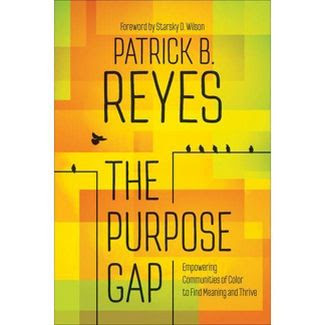
I felt as if I was overhearing an intimate conversation among friends and allies while reading Reyes' The Purpose Gap: Empowering Communities of Color to Find Meaning and Thrive (2021). Patrick Reyes clearly informs the reader that this book is for Black, Brown, and other minoritized individuals and groups that have not had "the resources and opportunities to fulfill their purposes in life" (Acknowledgements). As a reader who has not experienced the debilitating forces of discrimination beyond its corrosive impact on society, the book was helpful as a way to understand what needs to change and it also helped me to accept the limits that liberal advocates of inclusion should consider.


I have written about purpose and calling in life and I admit that I never realized the privilege bias in my own thinking - I wrote as if all one must do is discern purpose, continually hone it for good, develop the capacity to act on it, and stay the course. No, calling to vocation is not available to all people in the same ways and Reyes' writing helped me to understand how I missed the mark on this. The "purpose gap" is proposed as both an individual and community concern for only in a supportive community can everyone discover their potential, with "everyone" being key. Reyes is not talking about individual and exceptional stars who break the bonds of racism. His analysis is about systemic conditions that are deliberately designed to hold entire groups of people back, and these conditions will not change without dramatic transformation.

As a youth raised in a Latinx community in California, Reyes asserts "purpose is defined, stolen, or withheld before we ever enter the world" (p. 2) prohibiting youth from achieving what they were born to do. The barriers are erected by the "inheritors of wealth" who also guard the bridges to opportunity that would otherwise be available.  Reyes indicates that some of the barriers include internalized racism and imposter syndrome, but the greatest challenge is the lack of resources to pursue one's purpose. Grounded in his faith perspective, Reyes soberly recognized that we live in a society that decided who it could and would love and that "parents of color must teach our children they are loved despite a world that is not doing its best" (p. 24). Reyes goes on to say that to assume that the "American Dream" is achievable for all is nothing bot colonial piety.

The Purpose Gap admonishes those in Black and Brown communities to begin the journey by rewriting and retelling their story of purpose, drawing on the wisdom of their ancestors. He takes on Joseph Campbell's "hero's journey" by declaring it as a linear and individual story that denies the reality of minoritized communities. Instead, Reyes says, "I reserve my vocation, my life, and my purpose for my community. For my community first called me to life when the world tried to take it" (p. 46). In order to redefine the space of calling, design thinking could be used to answer four questions: What is? What if? What wows? and, What works? Design justice emerges from these questions by guaranteeing the distribution of shared benefits and burdens among various groups and peoples.

Reyes identifies community centers, libraries, parks and extended family networks as places that foster meaning and purpose for minoritized groups. Referencing the importance of faith organizations, he says that "The church not only has a call, vocation, and purpose. More importantly, it has the means and power to act on its purpose" (p. 62) and has a special responsibility in closing the purpose gap. To do this, the church must move from recognizing that stars exist to seeing that they must exist in constellations - places where the conditions for purpose and success are available to all. In these constellation places, leadership is also different. Instead of an individual act, leadership comes from tireless learners, pursuing "new angles, perspectives, viewpoints, and wisdom with excessive curiosity" (p. 109). Leadership must also foster specialists, those with wisdom and salient knowledge (e.g., intuition), and spirit workers to activate and sustain a community where constellations of stars are possible. On this final point, Reyes notes, "Closing the purpose gap is not just about changing the material world. It requires us to connect with and find healing with the spirits that guide our journey" (p. 166). In another passage he advocates hope in this work by saying, "I do want to say to this broken world, 'I see your violence, and I will raise you hope and love'" (p. 174).

In closing, Reyes offered three practices to help close the purpose gap for individuals and communities: 1) tell a new story, 2) design for purpose on our terms, and 3) know that it's about today!

Monday, September 05, 2022

Bremmer - The Power of Crisis

Ian Bremmer's latest book, The Power of Crisis: How Three Threats and Our Response will Change the World (2022), is short and very much to the point. The world community has work to do and we should do it quickly before the crises we now face get beyond our ability to address them. The hopeful part of his warning is that crisis tends to call the greatest ingenuity and most creativity from the human spirit so we can address our shared problems, but it is a matter of awareness of the risks and the will to do something about it.

Bremmer used the recent pandemic of 2020 and beyond to extract the lessons that we need to collectively learn. The three crises he says are eminent are shaking off the effects (economic, political, and social) of COVID-19, climate change, and the impact of new technologies that are changing our daily lives. The COVID-19 pandemic demonstrated graphically that we have both a civil war within the U.S.A. (polarization around science, common welfare, and politics) and the risk of a new cold war between the U.S.A. and China. In fact, COVID-19 pushed the world into a geopolitical recession where political groups withdrew from engaging with one another and across national borders. The impending crises of climate and technology will require new international systems of engagement that are designed to address today's and tomorrow's challenges.

With all that globalism promised, it has been a miserable failure. Specifically, the anticipated leveling of opportunity and economies was not only unfulfilled but wealth and resource inequality increased in the face of rising commercial exchange across borders. The wealth gaps in the U.S.A. have contributed significantly to the acrimony and divisiveness of political decision making, with those who are wealthy manipulating less-resourced groups against each other. The evidence of who controls political discourse is clearly evident in the $14 billion spent on elections for the two houses of Congress in 2020, a figure double that of 2016. One of the most inflammatory dimensions of politics in the U.S.A. is structural racism, a pervasive dynamic that many assert doesn't even exist.

Bremmer asserted that Xi Jinping, not U.S.A. Presidents and politicians, has placed U.S.A.-China relations on a more precarious path. The most frightening aspect of this is that the world has never experienced a time when its largest economy (soon to be China) was directed by an authoritarian government. The problem is that, for all the frailties of authoritarianism, it creates more cohesion and immediate functionality than messy democracy. At present, the balance of power between the U.S.A. and China is unclear, a situation in which inadvertent or purposeful conflict is much more likely to occur. Conflict could arise from governmental subsidies to businesses that lower production costs, from the theft of intellectual and innovation property, or it could arise from the growing threat China is signaling in relation to Hong Kong, and even more so in relation to Taiwan. The most likely battle between the U.S.A. and China is in relation to the future of technology - communications, machine learning, surveillance, and artificial intelligence.

The lessons that the COVID-19 pandemic taught the world include: invest in national and local readiness, share information, and share burdens and their resolution. The economic damage of the pandemic was widespread and deep, but it also sped up the transition from a 20th century to a 21st century economy. This is particularly applicable in relation to digital age companies.

For possible answers to the dysfunction of both the politics of the U.S.A. and China, Bremmer recommended looking at Europe's leadership on climate, technology, and provision of citizen safety nets. The work undertaken across European borders has been more effective than many other areas of the world, including even within the 50 Unites States. Climate and political refugees have flooded into many European countries and accommodating them has not been easy. However, by contrast to the U.S.A., political leaders recognize that refugees will create public unrest wherever they land and that constant effort to shape public perception in positive ways is essential. Climate and human migration will be challenging but Bremmer predicts that artificial intelligence is the greatest potential disrupter - "The greatest risk that AI presents is the possibility that one country will develop an insurmountable lead in its development, an achievement that would allow it monopolistic control over the world order" (p. 159).

The solution to the crises we presently face is for the U.S.A. and China to recognize that they must avoid economic and political stalemate, parking the differences that are real in order to find solutions that protect the whole of humanity. The technology challenge can be managed by creating a World Data Organization composed of European, Asian, and other allies that will by necessity bring China to the table. The resolution of our joint climate and technology challenges may emerge from a type of "Goldilocks crisis" that demonstrates the viability of multiple forms of government and focuses on practical solutions based on complex social engagement, cooperation, and coordination.

Wednesday, July 27, 2022

Herman - The Viking Heart

Partially motivated by a search to discover his own roots, Arthur Herman painstakingly documents the Viking Age to provide a more complete picture of who the Vikings were in The Viking Heart: How Scandinavians Conquered the World (2021). By going back as well as recounting the more contemporary impact of Scandinavian immigrants in America, Herman provides a much more complete characterization of a people and period of time that is often portrayed only for its brutality.

The Vikings, originally knows as Norsemen, were a people with a particular "frame of mind, a way of life, a way of doing things and making things, including making things happen in the face of the worst adversity" (Preface). Herman asserts in the book title as well as text that this particular way of being was distinctive and survives to this day, evident in a much larger portion of our collective genetic mix and human history than most people realize.

The Vikings, originally meaning "people of the Vik" or sea voyagers, traveled widely throughout Europe and into the Mediterranean, spreading ideas about astronomy, medicine, mathematics, physics, and instruments wherever they went. Coming from the current lands of Norway, Denmark, and Sweden, Vikings first sailed to England in the year 793 when they began their summer raids. Large Norse expeditions began staying over the winter in Ireland by the 840s and York became the capital of the Viking kingdom by 876. By 878 over half of England was under Viking domination, with the Orkney and Shetland Islands, Scotland and Ireland essentially being Norwegian colonies. During the period 780 to 950 Vikings from Norway and Denmark penetrated all of Europe and those from Sweden pushed as fas as the Mediterranean and the Black Sea.

The seafaring exploits of the Vikings revolutionized ship design and navigational capability, allowing them to travel faster and farther than any other sailors of the day. Mobility and pursuit of resources quickly turned from piracy and raiding to trade and settlement, resulting in Vikings establishing villages, turning to agriculture and fishing, and intermingling with Saxon tribal groups throughout England. As the number of villages increased, Vikings established "The Thing" as a political institution for landowners to address concerns that affected the entire community and elect their kings. The Althing of Iceland is derived from this self-governing entity and constitutes the oldest continuous democracy in the world.

The Vikings embraced many cultures and languages but men were privileged in all. While women were recognized as playing an important part in Viking villages, they were certainly not recognized as equals. Viking ships also supplied slaves to central Europe who were captured from Slavic tribes widely dispersed from Kiev in Ukraine to Prague in Bohemia. "The wealth and prosperity of the golden age of Islam were made possible in large part by the human labor supplied by Viking slave traders" (p. 49). The trade resulted in Vikings amassing hoards of silver, including eighty-four thousand silver coins eventually discovered in Sweden.

The concept of leadership in Viking days included the leader being one with his subordinates and loyalty terminating only at the point of death. There were no limits to the loyalty expected and given to the most revered among them. The brutality and sacrifice of the early Viking "berserkers" (from which we adopted "going berserk") would eventually merge with the spread of Christianity and by 1000 CE Vikings moved to a spiritual journey rather than a physical one. The myth of seeking a placed in Valhalla, a place where the bravest warriors go when they are killed in battle, was replaced by a Norse-informed religion that viewed the relationship between humans and gods as reciprocal. In this transactional view, "what seems to be decline and destruction is ultimately a source of renewal" (p. 112), a view adopted in Nietzsche's "myth of the eternal return." The progression of Christianity was slow and included the incorporation of previous images and borrowed traditions of paganism. Eventually, Christianity embraced compassion and moral obligation and the "Viking ideal of loyalty and service to community took on a new dimension: one of service to Christ and others as a Christian duty" (p. 122).

The Viking Heart traces the evolution of Viking character from 793 until the days of William the Conqueror (born 1027 or 1028 to September 9, 1087) when Norman's transformed the Viking "aristocracy of the brave" into the "dynastic rulers and cultural transmitters" who "laid the foundations for the unity of the medieval West" (p. 161). These foundations served the descendants of the Vikings well for almost another 1000 years.

Viking myth permeates many of today's most popular books and films - J.R.R Tolkien's Lord of the Rings, George Lucas' Star Wars, and J.K. Rowling's Harry Potter all celebrate the superheroes and fantasies of these ancient stories. The "...dazzling qualities of the Viking Heart - indomitable courage, fierce loyalty, national pride and power, plus a religious zeal and a charismatic ambition" (p. 216) are qualities that inspire many among us. The unfortunate part is that not all recognize the accompanying depth of commitment to community, equity, and helping one's neighbor that a Viking heart would embrace. Bravery, fierceness, and dominance divorced from the commitment to common welfare have inspired some of the hate and aggression that is seen among white supremacy groups today.

The Viking Heart is a long but interesting read. I have only summarized the early history portion of the book and for those who want more on how the Viking heart impacted more contemporary times, the rest of the book will be of great interest. Related to leadership, it was clear that much of the philosophy and many of the images of Vikings are celebrated in the heroic versions of leadership that popular media often portray.

Friday, July 22, 2022

Popelka - Experience, Inc.

Jill Popelka, former SAP executive and advocate for improving the experience of work, offers compelling evidence that organizations of all sorts need to change. The specific change is that they should prioritize employee experience in order to foster motivation, commitment, and innovation and all of these contribute to the bottom lines of productivity, profitability, and sustainability.


Experience, Inc. (Popelka, 2022) is relevant to all types of organizations, although the author is coming from over 25 years as a technology executive. Think schools, not-for-profits, community, churches, and for-profit businesses. None can escape the reality of 2022, a time when post-pandemic recovery is underway but with the new twist of employees being empowered to demand better compensation and working conditions. Even organizations that rely on volunteers would do well to heed Popelka’s advice; perhaps these settings require even greater focus on experience – the experience of being involved, contributing, and spending time in ways that bring meaning to one’s life.


 What do employees (e.g., workers, volunteers, contributors) want?

·      Purpose: to find meaning in their work

·      Agency: to have some say over how, when, and where they work

·      Belonging: to feel part of a community, even if they are remote, freelance, or part-time; to be part of a diverse community.

·      Recognition: to be acknowledged for their contributions, in multiple forms, on a regular basis (p. 12).

It's not about simply going through the motions of employee responsiveness. These conditions must be based on a sincere belief in people and in their desire to both advance themselves and contribute to something greater than themselves.


Agency and autonomy are core to ongoing growth and innovation and, therefore, deserve special attention. Popelka references Dr. Autumn Krauss to explain the primary challenge – “Marketing has got it all segmented down to a sample size of one… we shouldn’t be surprised that employees come to work wanting an individualized experience, specifically catered to them” (p. 54). Agency allows workers to figure out what is important to them and propose ways to achieve what they most want. Agency and autonomy require cultivation, especially among new members of any community. When you’re new, the inclination is to go along with what you believe is expected which tends to disempower. Helping newcomers identify their vision for themselves and how they will contribute may involve ambiguity that is initially challenging but it ultimately contributes to much greater involvement and satisfaction.


Leadership is obviously very important when attempting to create better workplaces or more engaging communities. And the most important responsibilities of contemporary leadership are:

·       Driving clarity of purpose

·       Creating connection

·       Requiring transparency and building trust


It’s not about charisma or power – it’s about the people and leading in ways that engage them.


Popelka’s book is easy to read, provides numerous examples, and offers “Take this with you” boxes at the end of each chapter to remind the reader of key points. Near the end of Experience, Inc. she offers the bold statement “Perhaps my single greatest motivation for writing this book is to argue that what is good for the company can never again be separated from what is good for its workers” (p. 196). Rephrase this for any organization – what is good for the collective can never again be separated from what is good for those who contribute to it. Purpose, a sense of belonging, and recognition of value naturally foster greater productivity.


Tuesday, May 10, 2022

Pink - Power of Regret


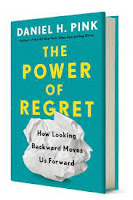
Daniel H. Pink’s 2022 book, The Power of Regret: How Looking Backward Moves Us Forward, reframes an emotional struggle many of us have throughout life. We look at things we did, and regret having done something we now see as destructive or even morally reprehensible. Or we look at things we didn’t do and bemoan the lost opportunity or different future we could have had.


Pink starts his analysis of regret by debunking the commonly professed “I have no regrets.” Of course, we have regrets and to not have them is to not feel, to not live. Regrets are what make it possible to connect with others – all of us wish that we hadn’t done some things or had done other things that we passed up. He goes on to explain how regrets make us better and identifies the core regrets with which we generally struggle. Then he closes with advice on how to deal with regret.


This book is not just an opinion piece; it is based on a worldwide regret survey that included both a tabulated survey and open-ended responses of what people around the world regretted. Before launching into his own research, Pink summarizes seventy years of previous research with two conclusions: 1) regret makes us human, and 2) regret makes us better. And regret is a uniquely human capability because we have the ability to travel across time in our memories and we can imagine different experiences that didn’t actually happen. We can see this easily in a common regret expressed in Pink’s survey – people wish that they had taken their educations more seriously, which they believe would have led to different life outcomes. In addition to mental time travel and imagining other outcomes, humans have the ability to compare their own experiences with others and they are inclined to place blame, either on themselves or others. An example in work is that we can regret following a parent’s advice in career choice, therefore blaming them when we’re stuck in a career or workplace that we dislike.


The four core categories of regret that research defined are; foundation regrets (failures to be responsible, conscientious, or prudent), boldness regrets (chances we didn’t take), moral regrets (behaving poorly, or compromising our goodness), and connection regrets (neglecting people who contribute to our wholeness). Pink provides numerous examples of each category and then offers strategies that are applicable to varying degrees across all four. The strategies are: 1) undo it, 2) "at least it," and then heal through 3) self-disclosing, 4) self-compassion, and self-distancing. Owning up to “regret, when handled correctly, offers three broad benefits. It can sharpen our decision-making skills. It can elevate our performance on a range of tasks. And it can strengthen our sense of meaning and connectedness” (p. 42).


This book is short and has some core wisdom to it. While it doesn’t really break boundaries it is the reframing that helps – reframing that allows us to accept the things in our past that sometimes nag us, learning from them, and choosing to do better in the future. Pink’s book is worth a quick read for anyone in leadership, since leadership regrets are common for those who have attempted anything of note, or perhaps taken on a challenge that could have made a lot of difference in our lives.

Monday, April 11, 2022

Loebel - America's Medicis: The Rockefellers and Their Astonishing Cultural Legacy

The Medici legacy in Florence, Italy, stands across the ages as one of the most amazing periods of arts sponsorship known to history. The Rockefeller family may be recognized as equivalent to the Medicis as history provides a bit more distance on their contribution to art in the 20th century. The equivalence of the two families and how they preserved, celebrated, and educated around the arts is the subject of Suzanne Loebel’s America’s Medicis: The Rockefellers and Their Astonishing Cultural Legacy (2010).


In her introduction, Loeble remarks “the Rockefellers’ most important contribution was to teach America that art and its enjoyment, message, and healing power did not belong to a rarefied elite, but could be loved, understood, and even owned by all” (Introduction). Their advocacy ranged across different eras and places (e.g., Asian, Egypt, Mesopotamia, Palestine, American folk art, and Mexico), embraced diverse cultures, and included not only the visual arts of print and painting but impacted architecture as well. Examples of major collections include the Cloisters (NYC), Museum of Modern Art (NYC), the Oriental Institute (University of Chicago), the pristine island of Acadia National Park  (Maine), and buildings such as Riverside Church (NYC), Rockefeller Center (NYC), Lincoln Center for the Performing Arts (NYC), the Fine Arts Museums of San Francisco, Nelson A. Rockefeller Empire State Mall (Albany, NY), and Kykuit (family mansion in Mount Pleasant, NY, now open as a sculpture garden and museum). 

John D. Rockefeller, Sr. became the founding patriarch at age 16, forced to assume the “head of household” responsibilities when his father abandoned the family. Senior founded Standard Oil Company with a partner. Timed perfectly to take advantage of rising fuel demand in the late 19th century, he amassed a fortune that would be the base for the generations of Rockefellers to follow. Religion was central in Senior’s life, a staunch Baptist who taught Bible classes throughout his adult life and, along with his wife, Aby, believed in education, aiding the poor, and adhering to principles of thrift and humility. 


John D. Rockefeller, Jr. adhered to the business advice and dictates of his father but rebelled to some degree against his mother’s conservative religious views. The rebellion did not stand in the way of Junior’s loyalty being expressed in the establishment of the University of Chicago as a Baptist university or the building of Riverside church in NYC. One of Junior’s greatest skills was identifying mentors and loyal collaborators who helped him achieve his ambitions. Frederick T. Gates became one of his greatest supporters and stewards of Rockefeller’s wealth. Regardless of the family’s commitment to philanthropy, the Rockefellers were included among the “robber barons” who were despised by many in the heady days of growing industrialization.


Senior and Junior sought to democratize art by bringing it to broad numbers of citizens. This inclination toward opening the arts to all is somewhat in contrast to the fact that both were enthusiasts of free and unrestricted trade and opposed unions. Their beliefs were immortalized in Junior’s personal creed, which was inscribed on the staircase leading to the Rockefeller Center ice skating rink:


I believe in the supreme worth of the individual and in his right to life, liberty, and the pursuit of happiness.


I believe that every right implies a responsibility; every opportunity, an obligation; every possession, a duty.


I believe in the dignity of labor, whether with head or hand; that the world owes no man a living but that it owes every man an opportunity to make a living.


Loebel’s book includes extensive detail on the collections of Senior, Junior, and other subsequent Rockefeller family members. Large portions of the family’s personal collections were donated to the museums that they either created or supported.


These Rockefeller collections are now on my new “bucket list” to see in the coming years. Clearly, a couple of weeks of touring Rockefeller museums would be an incredible treat. And, it would provide the opportunity to think about art as a catalyst for change, particularly art that is open and available to all, regardless of individual taste, preferences, and interpretation. After all, art is the visualization and symbolization of human experience. Exploring others’ views through art is a primary way by which we can build the bridges and relationships that we need for a thriving and sustainable world.

Thursday, February 10, 2022

McGhee - The Sum of Us

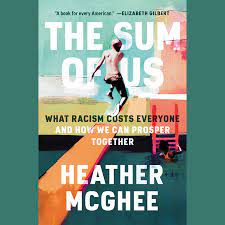
Heather McGhee’s The Sum of Us: What Racism Costs Everyone and How We Can Prosper Together (2021) not only captures the collective cost of racism to everyone, black/white or privileged/middle income, but also sums up several other author’s contributions to understanding racism and what must be done to eradicate it from the U.S.A. Other books I’ve read that seem to have led me to McGhee’s book include: Coates’ We Were Eight Years in PowerKindi's How to Be an Anti-RacistJones’ White Too LongWear’s Reclaiming HopeWilkerson's Caste, and Kruglanski’s The Psychology of Closed-Mindedness.

Two things stand out as prominent in The Sum of Us that weren’t there, or I did not fully recognize, in other author’s books: 1) that the negative cost of racism is broadly shared and 2) by highlighting this summative impact, we might actually reap a solidarity dividend that will help us to make progress in challenging it.


A tension with which I struggle is the philosophical stance of abundance versus that of scarcity. On a very personal basis, I recognize that most of the things that keep me from living the life I want to live are rooted in a scarcity view – fear of missing out, jealousy, regret. McGhee calls it the “zero-sum” game, a worldview that assumes that beating losers is the only way to acquire what one wants. 


McGhee’s analysis delves into economics, and particularly governmental policy related to it, and its impact on who has been able to accumulate wealth in the U.S.A. America and the “American Dream” evolved from a starving and scrappy colony that took land away from indigenous people and enforced slave labor to achieve its objective of wealth creation among a few landholders. As early as 1857, a white southerner, Hinton Rowan Helper, wrote that a crisis was on the horizon, one based on southern oligarchs’ refusal to support education and enterprise, a refusal that would result in southern whites being poorer in the long run.


Helper’s prescient observation emerged more profoundly as post-Civil War “Jim Crow” unfolded with white supremacy used to unite whites across class and against people of color. After desegregation was mandated by federal law, the combination of “separate but equal” policy and the closing of shared community resources such as swimming pools and other recreation resources were denied to people of color, which in effect denied them to white people with lesser means as well. The creation of a racial hierarchy was conceived and activated as a way of sowing discontent among those without power, pitting less educated and lower class whites against people of color. In essence, the racial hierarchy created a last-place aversion of low-income whites that allowed them to feel superior to at least people of other color and culture.


Governmental spending in the middle of the 20th century grew the American middle class. However, blanket policy was enacted that perpetuated inequality. The U.S.A. “deliberately created a white middle class through racially restricted government investments in home ownership and infrastructure and retirement security” (p. 11). The investment was in; low interest loans to encourage home buying, infrastructure such as roads and public utilities, education, and more. And isn’t it odd that once people of color attempted to access governmental investment, politicians decided that the project was too expensive? The conservative tropes to justify this withdrawal of access included “makers versus takers,” “taxpayers versus welfare exploiters,” and the now familiar “they’re coming after your job, your safety, your way of life” (p. 14).


Both spending and public opinion saw a marked shift during the Reagan era, a period of rising antigovernment conservatism. Although the Reagan movement claimed to be about conservatism, McGhee asserted that the shift was more about blunting “the government’s ability to challenge concentrated wealth and corporate power” (p. 47).  In sum, “Racism then, works against non-wealthy white Americans in two ways… it lowers their support for government action that could help them” (p. 50)… and results in racialized political polarization that forces a choice between class and racial interests.


The Sum of Us describes how racism, discrimination, and segregation negatively impact youth during their educations as well as how it denies wealth and the opportunity to live in safe and diverse communities to adults and families. It also includes hopeful evidence of successful solidarity initiatives that challenged the hierarchy of race and class. For example, significant cross-racial coalition building was an important part of the rise of unions in mid-20th century, a movement that improved the lives of workers of all backgrounds and races. More recent grassroots organizations have tapped the solidarity dividend to make progress on other important shared concerns. These include “Greater than Fear” that confronted the emergence of the “Tea Party” in Minnesota in 2018, “Just Transition” that activated coalitions of concerned citizens to tackle environmental degradation, and the “Truth, Racial Healing and Transformation” model and its TRHT Implementation Guidebook used in fourteen communities in 2017 to document and address the impact of racism. McGhee closes with a futuristic proposal to address wealth inequality by providing a “race-conscious housing effort to close the Black-white gap in home ownership” (p. 259).


McGhee’s book is not long but it is deep, offering summation and real possibilities for action for those who are serious about confronting and reversing the negative impact of racism on everyone. Abandoning the “zero sum” mentality and seeking a solidarity dividend through multi-racial coalitions of every day citizens are two factors that could bring us all to a new and better place.

Sunday, January 09, 2022

El Akkad - What Strange Paradise

Most of my reading is non-fiction but I chose to read Omar El Akkad’s What Strange Paradise (2021) after participating in our local library’s Zoom discussion with him. I immediately connected with Omar because he spent some of his youth in Qatar. I didn’t realize that the content of his book would directly relate to Paraq Khanna’s Move, which I read immediately before What Strange Paradise.


The story is about a refugee, one like those we have often seen in newspaper coverage over the last decade. Amir, a young boy who followed his uncle (actually his mother’s partner) aboard a small boat across the Mediterranean, is on a journey to somewhere that will allow him to escape the devastation of his home by war and economic collapse. The detail of where the boy is from, which is Syria, or other details of location are less important than how Amir’s experience reflects so many children who actively seek, or are taken on, harrowing journeys to unknown places in order to pursue a dream that they are not sure really exists. These children, their families and loved ones, are desperate and willing to do practically anything to MOVE to anyplace other than where they presently are. These are the political, economic, and cultural refugees of our world who want little more than a chance.


Most of the story of What Strange Paradise is set on a resort island where fleeing refugee boats often wash up on shore, thus temporarily disturbing the tourists who otherwise enjoy the pleasures of beautiful water and luxurious surroundings. Local authorities, with one being particularly pernicious, clean up the beach after bodies, clothing, and refuse washes up on the shore. They also track down any “invaders” who are seeking to transit through the resort on the way to a permanent location in displaced refugee communities. The rhythm of the book is unusual because each successive chapter is titled “Before” or “After” which vacillates between the time before and during the Mediterranean crossing and the after of the temporary respite at, and eventual escape from, the resort. 


What Strange Paradise is a quick read that initially did not capture my attention (I later went back to read the first four chapters for context). I’ve purposefully not provided detail because it’s important that readers discover the story as it unfolds. One spoiler alert is that there are those who help Amir, not always with fully positive impact, but their desire to cause him less harm is clear. Sadly, many of those who are privileged to live in places that are secure, prosperous, and open simply have no idea how bad life can be within threatened or refugee communities. That kind of privilege can result in our being no more than tourists on a luxurious vacation. As El Akkad describes the tourists on the island – “these people and their concerns belong to a different world, a different ordering of the world. A fantasy.” This book offers the opportunity for a sober awakening of why refugees of various sorts want to MOVE and the challenges they face on their journeys.

Friday, December 31, 2021

Khanna - Move: The Forces Uprooting Us

I follow Parag Khanna's writing and other media releases because I often find that he is quite able to get ahead of trends and predict changing environmental, economic, social, and political conditions that are important to us. His latest book, Move: Where people are going for a better future (2021), is again prescient in looking at the shifts in the world that will undoubtedly impact all our lives. This Talks at Google video captures the essence of Move and references other books Khanna authored.

Economic inequality and political upheaval intersecting with global environmental impact are driving people all around the world to move. Where people, especially those who are young and talented, are moving is the key. These moves involve both push and pull - environmental and economic disruption is the push and urbanization is the pull. The winners of the world talent competition, and the innovation and economic vitality it brings, are emerging but yet to be fully determined. Which cities will be on the list will have a profound effect on all our lives.

Much of Move includes review of various countries, their current state, politics, economic opportunity, and changing climate. Anyone who wants an objective summary of the state of the world will deeply appreciate these chapters and North Americans, in particularly, should carefully study Chapter 4, the “New American Dream.” The conclusions readers can reach from these chapters could very easily impact the movement of talent across the globe because the evidence leads to an ultimate conclusion that “mobility is destiny” and the forces impacting mobility are more often than not, beyond our ability to control and are accelerating. The key forces shaping this acceleration in human geography include; demographic imbalances, politic upheaval, economic dislocation, technology disruption, and climate change.

Khanna proposes that there are four likely scenarios for the future based on the determinants of mobility, authority, technology, and community (Chapter 1). The four scenarios include: 1) “Regional Fortresses” (much like today), 2) “New Middle Ages” (even greater fragmentation), 3) “Barbarians at the Gate” (more intensified competition and exploitation), and 4) “Northern Lights” (advanced planning for large-scale resettlement and environmental regeneration).  Northern Lights is by far the most attractive scenario for collective humanity and it requires movement of talent (especially those who are youthful, well-educated, and ambitious) across national borders with those countries that are most open to movement being the ones that prosper most. Attracting the Millennial and Gen Z cohort will require accommodating their mindset, which Khanna characterizes simply as “They want to work to live, not live to work. They want to be happy, do good, and not be poor” (p. 68). And, they are increasingly cosmopolitan (citizens of the world) and cause-mopolitans who are deeply concerned about climate change.

The issue of climate change is one of the most influential in driving talent migration. With southern hemisphere countries getting hotter and dryer, migration will push toward the north, potentially creating a new arctic “polar Silk Road.” Urban areas that are more protected from the devastation of climate change and that have created economies that welcome the flow of talent will grow in prosperity with the winners falling in zones such as inner regions of Canada, Colorado and the Great Lakes in North America, Germany and Scandinavian countries in Europe, and the “stans” rimming the Black and Caspian Seas. In locations where climate is less severe, with diverse talent attracted from throughout the world, “The most important passports of the future are skills and health rather than nationality”… with individuals judged “not by the accident of birth, but on their potential to contribute to society” (p. 231). And, those carrying these talent passports will have expectations of the places where they flow, and are likely to value “sustainable economies, diverse and inclusive societies, and a culture of rights and wellness” (p. 241).

Khanna’s analyses are very contemporary but his message is based on history – “Civilizations of the past collapsed because they failed to adapt to the complexity they themselves created” (p. 264). The adaptations that are now required globally will include mobility and sustainability that will move to higher elevations in northern regions of the world. Mass migration will then require open borders, attractive working and living environments, and a change in mindset from national sovereignty to shared stewardship for regions on which all humanity will increasingly rely for food, energy, and other critical resources. Khanna uses the term “cosmopolitan utilitarianism” to describe his view of mobility across the globe, movement that he believes should be a paramount human right (p.274).

Wednesday, November 10, 2021

Putnam - The Upswing: How America Came Together a Century Ago and How We Can Do it Again

Robert Putnam’s The Upswing: How America Came Together a Century Ago and How We Can Do it Again (2020) exceeds the importance of his previous “show stopper,” Bowling Alone. It is better documented and covers a breadth of information and data. Even though Bowling Alone was widely read and cited, it doesn’t begin to match the salience of the analyses, warnings, and recommendations of Upswing. Putnam makes a prediction but one that depends on us – many of us, seeing the signs and turning the seeds of change into a new reality of a more equitable and productive society.

The first chapters of the book provide the background for the four broad areas in which change has occurred – economics, politics, society, and culture. Trends were analyzed beginning at the height of the Gilded Age of the late 19th century, a period of incredible advancement for America but also extreme inequality, polarization, social disarray, and hyper individualism. The extremes of the Gilded Age ushered in the Progressive movement of the early 20th century, a movement that was primarily held together by a commitment to community and common welfare. While it took a couple of decades for the Progressive movement to address the extremes of the Gilded Age, it eventually secured policies that broke down elitist systems and created the middle class for which the U.S.A. was so renowned by the 1960s. However, once brought together, the common bonds began to disintegrate, returning to another Gilded Age in the early 21st century. The ebb and flow of these 120 or so years began with the individualistic and competitive “I” of the first Gilded Age, climaxed with the community focus of “we” in mid-20th century, and fell precipitously toward another “I” of our current era – an inverted “U” curve.


Putnam acknowledged that it is very difficult to determine cause and effect in the changes of the 20th century but some might suggest that it looks like a pendulum swinging back and forth in response to the excesses of each era – mid-century progress in most citizen’s welfare followed by a shift to individualism, tribalism, and the me-first thinking of many today. One thing that is clear is that the 60s were the hinge, or pivot point, of the 20th century. The period from 1968 to 1974 is recognized as a time of revolution and renaissance but also of fracture and discontent. The 1960s came in as “years of hope” and left as “days of rage” (p. 300), demonstrated so clearly in the literature and art of those years. “Something’s happening here/What it is ain’t exactly clear” (Buffalo Springfield) or Dylan’s “Blowin’ in the Wind” or “The Times they are A’Changin’” were a backdrop for the growing cynicism and individuality of the time. Putnam wrote, “movement toward an expanding ‘we’ suddenly reversed… growing polarization produced growing inequality, which produced growing social isolation, which produced in turn more polarization, in what seemed to be an endless downward spiral” (p 312).


Putnam turned to the all-important question of how America’s last upswing toward “we” occurred and how it might be restored. The Progressive movement included criticism of the Gilded Age and a repudiation of what the America of immigrant dreams had become and it included an understanding that ordinary citizens have the power to change their government. The early years of the Progressive era created infinite social capital that fostered a shared prosperity for all. Journalists were partially responsible for telegraphing the realization of inequity, which spawned a generation of politicians committed to the common good. The rise of community and “we” was a moral question and included citizens asking of themselves “what personal privileges and rights we might be willing to lay aside” (p. 329) for the benefit of all. This movement began in the lower or common ranks of citizens and then invigorated a new set of shared values. This is the lesson for the present day - inequity and environmental degradation are compelling moral mandates and require the active engagement of citizens to turn back toward a “we” mandate. The cautions Putnam offers at such a propitious time include: be careful not to overcorrect, never compromise on equality and inclusion, and remain faithful to individual liberty coupled with unwavering commitment to equality in all sectors.


The one question that remains when comparing the 19th and 21st century Gilded Ages is the influence of media and the wedge politics that divides so many groups and individuals. The 19th century Gilded Age offered the 1% hiding places behind gated landscapes that only the muckrakers eventually exposed. The 21st century Gilded Age displays all of the abuses, spun in deceitful ways by the perpetrators themselves. Yet, there are many victims of this age who remain enamored with what they see.

Saturday, October 16, 2021

Pink - Drive: The Surprising Truth about What Motivates Us

Drive: The Surprising Truth about What Motivates Us (Pink, 1995) is not exactly ground-breaking but provides a helpful summary of how our views of what motivates has changed. He provides summaries of past models that were used in many organizations to get commitment to specific work or tasks (e.g. carrot and stick), cites newer research that challenges these previous models, and goes on to apply a new way of motivating to a variety of settings – work, families, and self.


One of the most prominent strategies to motivate is reward. Businesses, in particular, use compensation to attract commitment and then reward it with compensation. The only problem with this model is that it only results in a short-term boost, an effect that wears off and may even contribute to long-term ambivalence. The opposite of reward, of course, is punishment. The combination of reward and punishment has seven deadly flaws; according to Pink they can extinguish intrinsic motivation, diminish performance, crush creativity, encourage cheating, become addictive, and foster primarily short-term thinking.


Pink draws a contrast between Type I, “I” for intrinsic desire, and Type X, “X” for external drive. Research on Type I motivation concludes that it almost always contributes to higher performance, is both born and bred, is independent of compensation, is renewable, and generates greater physical and mental well-being. Type I organization cultures have three key elements that help to reinforce the intrinsic desire to contribute; autonomy (which can be supported by a ROWE, results-only work environment, that focuses on task, time, technique, and team); mastery (which relies heavily on Czikszentmihalyi’s “flow” research, and includes mastery of mindset, of pain, and as an asymptote), and purpose (the pursuit of something that is central to an individual’s ultimate concerns.


A toolkit is included in Drive to help readers apply Pink’s ideas in practice. Key to the toolkit is for managers/leaders to give up control. Giving up control in constructive ways includes; involving people in goal-setting, using non-controlling language, and holding open office hours. Most important of all is for managers to ask “Whose purpose is it anyway?” If the answer is outside of the people who the manager is attempting to motivate, then fundamental rethinking should be undertaken.


Compensation (or reward) is neither as powerful as some think nor is it negligible in impact. The way to focus compensation in ways that are consistent with Pink’s recommendations include; ensuring internal and external fairness, pay more than the average, and define performance metrics broadly.


The bottom line in motivation for Pink are the “three essentials elements: (1)  Autonomy – the desire to direct our own lives; (2) Mastery – the urge to make progress and get better at something that matters; and (3) Purpose – the yearning to do what we do in the service of something larger than ourselves” (p. 218).

Wednesday, September 01, 2021

Kellerman - Enablers

In a world where social injustice remains unchecked and wealth inequality continues to increase, political “leaders” tell us “only I can fix it” and business “leaders” urge us to hire them to achieve the best yield on our stock portfolio. I’m done with it! Done with studying “leaders” who are typically only posing in their roles of leadership. I’m done with the conversations about valuing followership while at the same time continuing to reify the role of “leader” and pay outrageous sums to “develop” them or retain them.

How did I get here? I read Barbara Kellerman’s Enablers: How team Trump flunked the pandemic and failed America (2021). Kellerman has taken us to this place before in The end of Leadership (2012) and Professionalizing leadership (2018) but I’ve never felt such a strong push to abandon the study of leading. After having participated in a conversation with a small international gathering of leadership scholars and practitioners earlier today where I raised the question of why we keep talking about “leaders” and was immediately pushed to justify my position, I say it’s time to flip the conversation. The next time someone asks me to justify why we should pay more attention to followership and leadership as a continuum of active participation, my response will be, “First, let’s talk about why you believe that spotlighting leaders is so important and why, after several decades of intense study of leading and cultivation programs to support leaders, we can document so little progress in improving the quality of leadership for our world?”

Kellerman’s new book doesn’t really explore leadership to any great extent and she quite often puts “leading” and “leader” in parenthesis, drawing attention to the possible misappropriation of the terms. Instead, her focus is on Donald J. Trump’s conduct during the first six months of 2020 when COVID-19 was creeping onto the world stage and the Trump administration was denying or discounting its influence in every way possible. How did Trump do this, one might ask? He did it with the sometimes passive, but mostly active, support, encouragement, acquiescence, and yes ENABLING of those around him.

A fascinating repeated paragraph at the beginning of each chapter that profiles the role of different individuals or groups reads, “… specifically, as it pertained to the pandemic – during the period January through June 2020. Each was in some way directly involved in how the president managed America’s worst public health crisis in over a century. Each, then, was an enabler, a follower who allowed or even encouraged Trump to engage in, and then to persist in behaviors that were destructive.” It read like a lawyer presenting the prosecution’s case in a criminal proceeding with Kellerman indicting: the Vice President and Cabinet; Senior Advisors; Senators, Governors, Media; and Medical experts. There were very few within these ranks who resisted, who stood up to and challenged Trump; it took all of them to perpetuate the ruse of Trump leading effectively in a pandemic war, a premise embraced among Trump's conservative base to this day.

This is a book for every citizen to read and, especially, for every leadership scholar and educator to absorb. A great deal of the evidence Kellerman presents is public record, and now being analyzed more deeply by the Senate Judiciary Committee and other groups. Kellerman does a masterful job of putting the pieces together, dissecting the roles, and recounting the chronology of early 2020. I won’t ruin the fun of the book by quoting further because one has to read it to actually get the full impact of what Kellerman tells us. She describes how Trump prepared for what he could not have known would happen, and wished had not happened. The job of preparing for such a period of incompetence at such a dire time was polished over many years of Trump’s business dealings, his lies, his manipulations, and his base narcissism. As Kellyanne Conway and Hope Hicks often reminded us, the best strategy for Trump was to “Let Trump be Trump” and he was – why would anyone be surprised?

It’s time that leadership scholars and educators face the reality that we are not making progress when such a graphic example as Donald J. Trump’s Presidency, with such dramatic lack of preparedness and temperament, is laid open before us. It wasn’t just about Trump, it was about the legions of others who enabled him to take the U.S.A. to the brink. I pray the Kellerman’s book is a best seller and that we will learn from this very difficult case. We must honor and cultivate active followership that complements shared leadership of people trying to make the world a better place to live instead of continuing to glorify individual "leaders" who take us down destructive paths that put all at risk.